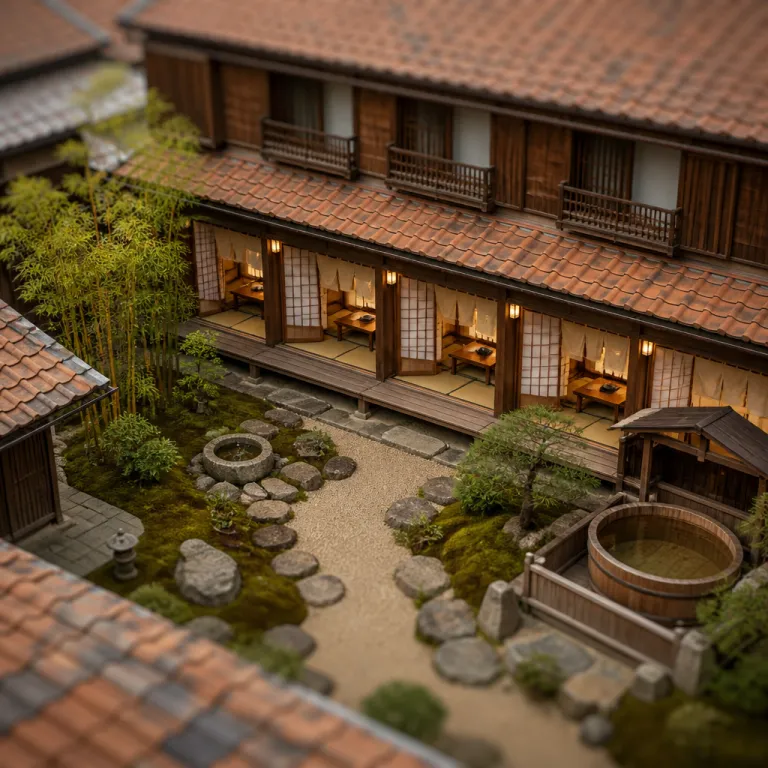
The quiet power of small luxury ryokan in Japan
In the world of small luxury ryokan in Japan, fewer rooms are a deliberate choice. Owners understand that keeping a ryokan under 20 rooms allows every stay to feel genuinely private and deeply personal, rather than simply efficient. Across Japan, from Kyoto to Tokyo and the shadow of Mount Fuji, this small scale defines the best ryokans rather than limiting them.
Research on high rated ryokans in Japan shows that the average number of rooms is just 19.7, and more than 70 percent of these properties operate with 20 rooms or fewer to protect service quality and cultural authenticity. That statistic is not a marketing slogan ; it is the operating blueprint that lets a traditional Japanese inn maintain omotenashi, the quietly anticipatory hospitality that makes a guest feel known without ever being crowded. When you check availability at a luxury ryokan and see only a handful of rooms open, you are not looking at poor availability booking performance but at a business model built around scarcity and care.
In a small luxury ryokan in Japan, the architecture reinforces this intimacy, because rooms open directly onto gardens, inner courtyards or views of mountains such as Mount Fuji. Many ryokans are housed in wooden sukiya zukuri structures or renovated machiya townhouses, where adding more rooms would mean losing the proportions that make each room feel like a private retreat. Guests who book through platforms such as Agoda or use booking Agoda links on specialist sites quickly learn that the best ryokan experiences are rarely found in large properties with long corridors and anonymous rooms.
The omotenashi equation: why one attendant per room changes everything
At a true luxury ryokan, service is built around the nakai, the dedicated room attendant who looks after a couple or a family throughout their stay. This one to one relationship only works when the total number of rooms stays low, because each nakai must manage everything from tea on arrival to the timing of the open air bath and the pacing of the kaiseki dinner. When a ryokan grows beyond 20 rooms, that ratio stretches, and the quiet choreography of traditional Japanese hospitality starts to fray.
Owners and managers know this from experience ; they limit rooms not because demand is weak, but because the service promise is fragile. One internal guideline often repeated among ryokan owners is simple and blunt : "Why do ryokans have few rooms? To provide personalized service and maintain traditional hospitality." When you book what is advertised as the best ryokan in a region, you are usually paying for this service density, not just for a larger room or a more dramatic hot spring view.
For couples planning a romantic stay, the difference is tangible from the first check in moment, whether they arrive from Tokyo by train or fly in through a major air hub. A small luxury ryokan in Japan can schedule private onsen sessions, arrange kaiseki dinner courses around your pace and dietary needs, and quietly prepare the futon in your room while you enjoy the public bath. When you check availability on Agoda or another booking platform, look beyond star ratings and focus on how many rooms private attendants must handle, because that number will shape every interaction.
Travelers who combine a few nights in Kyoto with a side trip to Kobe for a refined steak experience at Wakkoqu often notice how different a 12 room ryokan feels compared with a larger hot spring resort. In the smaller property, the same staff member may guide you to the open air baths, serve your sake and remember your preferred bath temperature the next morning. That continuity is the essence of omotenashi, and it simply cannot be scaled indefinitely without turning a ryokan into a standard hotel with Japanese style décor.
Architecture and water: why you cannot just add another wing
The physical fabric of a small luxury ryokan in Japan is often as constrained as its service model. Many of the finest ryokans sit on narrow riverbanks in Kyoto, cling to forested slopes above hot spring valleys, or occupy compact plots in historic towns where land is tightly regulated. In these settings, adding more rooms would mean building upward or outward in ways that break the harmony between wooden beams, tatami rooms and the surrounding landscape.
Traditional Japanese architecture such as sukiya zukuri relies on proportion, sightlines and the relationship between interior rooms and exterior gardens, which is why rooms open onto verandas, stone paths and carefully framed views. When a ryokan owner considers expansion, they must weigh not only construction costs but also the risk of losing the quiet transitions between corridor, room and open air bath that define the guest experience. The result is that many of the best ryokans in Kyoto, Hakone or near Mount Fuji choose to refine existing rooms rather than chase higher availability booking numbers through expansion.
Water adds another layer of constraint, because onsen ryokan properties are literally built around hot spring sources with finite capacity. Spring water emerges at a specific temperature and flow rate, and each additional air bath or open air tub draws from that same source, so there is a hard limit to how many private onsen baths and public bath areas a site can support. When you stay at a small luxury ryokan in Japan and enjoy a deep stone bath filled with mineral rich hot spring water, you are experiencing a resource that cannot simply be multiplied to serve 150 rooms.
In classic hot spring towns such as Kinosaki, where our refined guide to ryokan stays highlights several stand out properties, this balance between architecture and water is especially clear. A 15 room onsen ryokan can offer both shared public bath facilities and a few rooms private open air baths without overtaxing the spring, while a larger complex must compromise either on intimacy or on the quality of the water. For couples, that means choosing a smaller property often leads to quieter air baths, shorter waits for private time slots and a more contemplative rhythm to the entire stay.
The pricing math: intimacy, risk and the struggle to stay small
Behind the serene façade of a small luxury ryokan in Japan lies a demanding balance sheet. Fixed costs such as building maintenance, staff salaries and hot spring infrastructure are spread across fewer rooms, which pushes nightly rates higher than many first time visitors expect. That is why a 12 room luxury ryokan with private onsen facilities near Mount Fuji may charge more per room than a 150 room resort hotel in Tokyo.
Yet higher prices do not automatically translate into high profits, because the service model is labour intensive and seasonality still affects demand. Owners often rely on a mix of direct booking, specialist agencies and platforms such as Agoda to keep occupancy steady, while carefully managing availability booking windows to avoid overcommitting staff and hot spring capacity. When you check availability or use booking Agoda tools for a sought after Kyoto ryokan, you may see long stretches marked as full, not because demand is weak, but because the property is protecting its service standards.
For guests, this economics of intimacy has practical implications, especially for couples planning a special stay. You need to book months ahead for the best ryokan experiences, particularly if you want rooms private open air baths or a specific kaiseki dinner seating, because the small inventory disappears quickly. Flexible travelers who can adjust dates and check multiple booking channels, including Agoda and direct websites, often secure better rates and more interesting rooms than those who only look at one weekend and give up when nothing appears open.
Financial pressure also explains why some storied ryokans experiment with modern hybrids, adding a few more rooms or simplifying kaiseki dinner formats to control costs. Yet the most respected properties in Kyoto, Kanazawa or rural Japan still choose to cap their room count under 20, accepting thinner margins in exchange for long term reputation. For them, the best marketing is a guest who leaves saying that every bath, every course and every interaction felt unhurried, and that kind of praise cannot be bought with advertising spend or aggressive availability booking tactics.
The modern hybrid and the slow travel shift
As Japan’s hospitality scene evolves, a new generation of brands is testing how far the ryokan format can stretch without breaking. Groups such as Hoshino Resorts, with its KAI properties, operate onsen ryokan style hotels with 30 to 50 rooms, aiming to combine traditional Japanese elements with the efficiencies of a larger operation. These hybrids offer consistent design, reliable booking systems and easier availability booking, but they inevitably feel different from a family run 15 room inn where the owner still greets guests at the entrance.
For many international travelers, especially couples from the United States, these larger properties provide a gentle introduction to the ryokan world. You can reserve through Agoda, pay with familiar cards, and check availability in real time, while still enjoying tatami rooms, kaiseki dinner and access to both public bath areas and some rooms private open air tubs. The trade off is that service becomes more standardized, with fewer chances for staff to remember your preferred bath temperature or adjust the kaiseki pacing to your exact appetite.
At the same time, global interest in wellness and slow travel is pushing more guests toward the smallest properties, where the rhythm of the day is set by the onsen schedule rather than by sightseeing checklists. A small luxury ryokan in Japan naturally supports this slower pace, because there are fewer rooms open, fewer announcements and more quiet corners to sit after a long air bath in mineral rich spring water. Travelers who combine nights in these intimate ryokans with stays in carefully chosen city hotels or refined regional bases such as the properties featured in our elegant guide to the best hotels in Kanazawa often report that the contrast sharpens their appreciation of both worlds.
For couples planning an itinerary that includes Tokyo, Kyoto and perhaps a side trip to Mount Fuji, the most rewarding strategy is to mix formats. Choose one or two nights in a truly small onsen ryokan with fewer than 20 rooms, where the focus is on private onsen time, kaiseki dinner and unhurried baths in hot spring water, then balance that with stays in design forward city hotels. This approach respects the economics of intimacy that keep Japan’s finest ryokans small, while giving you a deeper sense of how traditional Japanese hospitality continues to shape modern travel across the country.
How to read listings: spotting true small ryokan on booking platforms
When you start planning a trip, the online landscape can blur the line between a genuine small luxury ryokan in Japan and a large hotel with Japanese style branding. Many listings on platforms such as Agoda use words like onsen ryokan or best ryokan quite freely, even when the property has more than 100 rooms and a layout closer to a resort. To find the intimate places where omotenashi still operates at a one to one scale, you need to read beyond the headline.
Begin by checking the total number of rooms and looking for properties with 20 rooms or fewer, because that threshold is where personalized service becomes realistically sustainable. Pay attention to whether rooms private open air baths are available in only a few suites or spread across many categories, since a limited number usually signals a smaller, more carefully managed hot spring source. When you check availability, notice how often dates are closed out months in advance, as this pattern is common in small ryokans that prioritize service over maximum occupancy.
Next, study the bath descriptions with care, because the language around hot spring facilities reveals a lot about scale and philosophy. A true onsen ryokan will emphasize natural spring water, detailed information about mineral content and a mix of public bath areas and perhaps a handful of private onsen or air bath options, rather than a long list of generic air baths attached to every room. If the listing mentions scheduled time slots for private use of open air baths, that often indicates a smaller property managing limited resources thoughtfully.
Finally, look closely at meal arrangements, especially if a kaiseki dinner is included in the rate. When dinner is served in guest rooms or in small dining salons with staggered seating, the ryokan is likely operating at a scale where staff can adjust pacing and presentation for each couple, rather than pushing everyone through a buffet. For travelers who value intimacy over sheer amenity count, these details matter far more than whether a property appears first in an availability booking search, because they point to the quiet, carefully maintained world that keeps Japan’s finest ryokans intentionally small.
FAQ: small luxury ryokan and room count in Japan
Why do ryokans have so few rooms compared with hotels?
Ryokans keep their room count low so staff can provide highly personalized service, from arranging private onsen times to serving multi course kaiseki dinner in sequence. With fewer than 20 rooms, a traditional Japanese inn can maintain omotenashi standards that would be impossible in a large property. This small scale also helps protect hot spring resources and the quiet atmosphere that many guests seek.
Are smaller ryokans always more expensive?
Smaller ryokans are not automatically more expensive, but fixed costs spread across fewer rooms often push nightly rates higher. Prices vary widely depending on location, the quality of the onsen, whether rooms private open air baths are included and how elaborate the kaiseki dinner is. Travelers who book early and check availability across several dates and platforms, including Agoda and direct sites, can sometimes secure very competitive rates at intimate properties.
Do smaller ryokans offer better service than larger ones?
Smaller ryokans often deliver more attentive service because staff can focus on fewer guests at a time. A 15 room onsen ryokan can assign one nakai to each room, manage private onsen schedules precisely and adapt kaiseki dinner pacing to individual preferences. Larger properties may offer more facilities, but service tends to be less personalized and more standardized.
How far in advance should I book a small luxury ryokan in Japan?
For popular destinations such as Kyoto, Hakone or areas near Mount Fuji, it is wise to book a small luxury ryokan several months in advance. Limited room inventory, especially for suites with private onsen or open air baths, means peak dates can sell out quickly. Checking availability regularly on platforms like Agoda and contacting the ryokan directly can improve your chances of securing preferred dates.
What is the practical difference between a 12 room ryokan and a 150 room ryokan style hotel?
A 12 room ryokan typically offers quieter spaces, more flexible use of hot spring facilities and highly personalized kaiseki dinner service. In contrast, a 150 room ryokan style hotel may have larger public bath areas and more amenities, but private onsen access, meal times and staff attention are managed for far more guests. Couples seeking intimacy and slow travel rhythms usually find the smaller scale far better aligned with their expectations.
Sources
Japan National Tourism Organization (JNTO) ; Japan Ryokan & Hotel Association ; HotelBank Editorial Team based on MetroEngines Research.