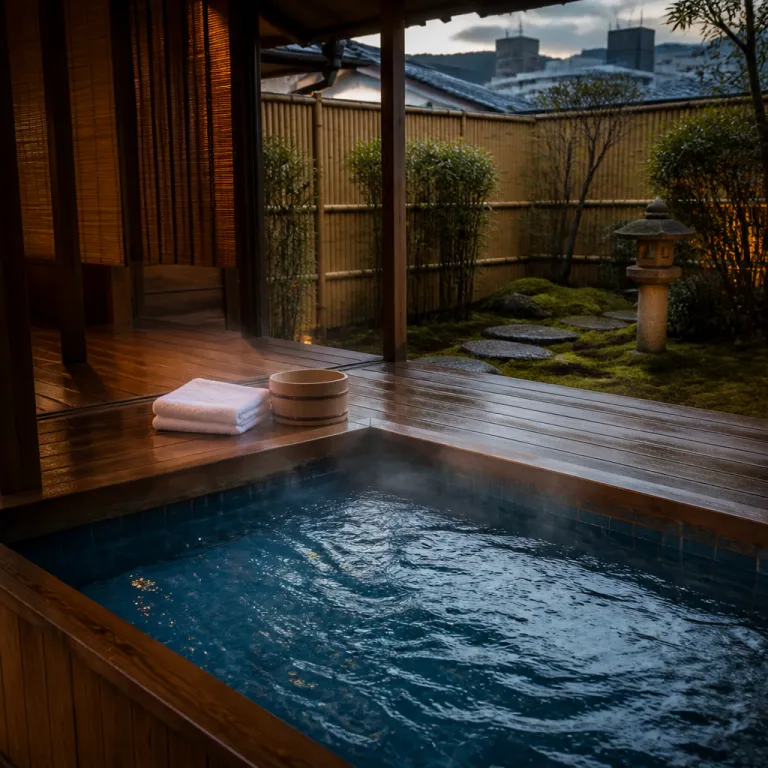
Why a ryokan with private onsen in Kyoto is the ultimate urban retreat
Choosing a ryokan with a private onsen in Kyoto transforms a simple stay into a deeply restorative urban retreat. In a city where temple roofs, lantern-lit lanes, and the quiet flow of the Kamo River define the rhythm of daily life, a Kyoto ryokan with its own hot spring–style baths offers guests a rare balance between cultural immersion and privacy. For travellers used to a luxury hotel in major capitals, the contrast between the city’s energy and the stillness of a private soaking bath in Kyoto feels both surprising and perfectly natural.
Traditional Japanese inns, or ryokans, combine tatami rooms, sliding shoji doors, and fragrant hinoki wood tubs with discreet modern comforts such as climate-controlled air, high-pressure showers, and curated kaiseki-style breakfast and dinner courses. In Kyoto, many ryokans now feature indoor stone or hinoki baths and open-air rotenburo that can be reserved for exclusive use, giving guests the freedom to bathe at their own pace without sharing the space with other travellers. This evolution has made the classic ryokan Kyoto stay especially appealing to international visitors who value both authenticity and personal space, particularly in dense districts close to Kyoto Station or in the quieter hills of Arashiyama.
Across the wider Kyoto area there are hundreds of ryokan-style establishments, and a growing share of these traditional inns now market themselves around private onsen or hot spring–inspired facilities. Some, like Togetsutei Ryokan in Arashiyama, offer rooms with private open-air baths that look toward the river and wooded hills, while others focus on serene indoor bath designs framed by small gardens. For travellers comparing a hotel Kyoto stay with a traditional Japanese inn, the key difference lies in the ritual and pacing of the experience: the act of washing carefully, easing into the hot bath, and then stepping back into a tatami room for tea or a seasonal dinner turns accommodation into a cultural encounter rather than a simple place to sleep.
Understanding private onsen etiquette and what to expect in Kyoto
Many first-time visitors worry about onsen etiquette, yet a ryokan with a private onsen in Kyoto offers a gentle introduction to these Japanese bathing customs. In a private room or reserved open-air bath, guests can follow the same steps as in a shared hot spring but without the pressure of other bathers watching. This makes Kyoto private bathing spaces ideal for couples, families, or travellers with tattoos who may feel uncertain about traditional communal baths.
Whether you stay at Togetsutei Ryokan, Ryotei Rangetsu, Hanaikada, or another Kyoto ryokan, the sequence is similar: you wash thoroughly outside the tub using the hand shower, then enter the hot water slowly and soak in silence. Many ryokans provide clear instructions in English in the rooms, and staff are used to explaining the difference between the washing area and the soaking bath so that guests feel comfortable. Some properties also offer both indoor tubs and open-air rotenburo, allowing you to choose between a sheltered room with a window that opens to a garden and a fully exposed terrace-style tub where you can feel the evening air on your skin.
For travellers who are building a wider wellness-focused itinerary, it can be helpful to compare the ritual of a Kyoto private onsen with other Japanese spa experiences across the country. Reading about the morning spa ritual at a luxury property such as Aman Kyoto’s spa ceremony gives useful context for how hot spring culture shapes high-end hospitality. While not every ryokan Kyoto property draws from a natural onsen source, many design their indoor baths and open-air facilities to mimic the feel of a hot spring retreat, using mineral-rich water additives, stone-lined tubs, and carefully controlled water temperature to create the same deep relaxation.
Where to stay: key Kyoto districts and standout ryokans with private baths
Location shapes the entire mood of a ryokan with private onsen in Kyoto, especially for travellers balancing sightseeing with rest. Around Kyoto Station, you will find a mix of high-rise hotel Kyoto towers and smaller ryokans that offer quick access to the Shinkansen while still providing traditional Japanese rooms. In this transport hub area, a property that is a five- to ten-minute walk from the station can feel surprisingly calm once you slide the shoji doors closed and step into your private room with its own bath.
Shimogyo Ward, which stretches between Kyoto Station and the downtown shopping streets, has become a prime area for urban retreats that blend ryokan aesthetics with hotel-style services. Here, nazuna Kyoto stands out for its intimate scale and design-led approach, offering rooms that reinterpret the classic Kyoto ryokan layout with modern lighting, refined materials, and in some cases private onsen-style baths. Travellers who value easy access to dining and nightlife often choose Shimogyo Ward because a short five- to ten-minute walk brings them from quiet lanes to lively streets, yet they can still return to a hot bath and a carefully prepared breakfast and dinner course in their room.
On the western side of the city, the Arashiyama district hosts several of Kyoto’s most sought-after ryokans with private open-air baths, including Togetsutei Ryokan, Ryotei Rangetsu, and Hanaikada. These properties sit near the Oi River and the famous bamboo grove, giving guests the chance to soak in an outdoor tub while listening to the water and distant temple bells. Travellers who enjoy combining city stays with nature often pair a few nights in Arashiyama with time at a lakeside hot spring resort near Lake Biwa, or with a themed luxury stay in Tokyo inspired by immersive concept hotels, creating a multi-city itinerary that balances urban energy and quiet retreats.
How to read reviews, ratings, and photos for Kyoto private onsen stays
When you search for a ryokan with private onsen in Kyoto, the volume of online reviews can feel overwhelming. To make confident choices, focus first on rating reviews that mention the condition of the baths, the quality of the breakfast and dinner service, and the ease of access from Kyoto Station or major bus lines. A high overall rating means little if guests consistently mention lukewarm water, cramped rooms, or a noisy setting that undermines the sense of retreat.
Look closely at guest photos rather than relying only on official images, and treat each photo credit as a small window into real experiences. Pictures that show the indoor bath or open-air rotenburo from multiple angles help you understand whether the private onsen is fully enclosed, partially screened, or completely exposed to the elements. When you see repeated praise for spacious tatami rooms, attentive staff, and well-presented traditional Japanese meals, you can be more confident that the Kyoto ryokan property delivers on its promises; one guest might note that “the bath was hot within minutes and completely private,” while another highlights “quiet corridors and staff who anticipated every request.”
Most luxury booking platforms now allow you to filter for private baths, open-air tubs, and in-room hot spring–style facilities, which simplifies the process of narrowing down Kyoto ryokan options. Use the check-availability function to test different dates, especially around cherry blossom and autumn foliage seasons when demand for onsen-style Kyoto stays peaks and prices rise. For travellers who want to deepen their understanding of Japanese hospitality standards beyond Kyoto, reading a detailed stay report such as a guide to a classic hot spring ryokan in Atami can provide a useful benchmark for service, room layout, and bath design in a long-established onsen town.
Design, dining, and wellness: what sets luxury Kyoto ryokans apart
Beyond the presence of a private onsen, the finest ryokans in Kyoto distinguish themselves through architecture, cuisine, and a holistic approach to wellness. Many properties preserve traditional Japanese carpentry, earthen walls, and inner gardens while integrating subtle modern comforts such as underfloor heating, silent air conditioning, and carefully tuned lighting. This blend of heritage and innovation allows guests to enjoy the tactile pleasure of tatami and wood while still benefiting from the standards expected in a top-tier hotel Kyoto stay.
Dining is central to the experience, and a well-executed breakfast and dinner sequence can be as memorable as the baths themselves. In many Kyoto ryokan properties, guests enjoy kaiseki-style dinner in their room or in a private dining space, followed by a seasonal Japanese breakfast that highlights local vegetables, river fish, and Kyoto-style pickles. When reading reviews, pay attention to how guests describe the pacing of courses, the balance between traditional dishes and modern touches, and the ability of the kitchen to accommodate dietary needs; many travellers comment that menus were thoughtfully adjusted once allergies or preferences were shared in advance.
Wellness extends beyond the hot bath, and many ryokans now offer in-room massages, guided meditation, or gentle stretching sessions that complement time in the onsen. Some properties design their indoor baths and open-air rotenburo to frame views of moss gardens, maple trees, or distant hills, turning each soak into a form of quiet contemplation. For travellers comparing ryokans with conventional hotels, this integration of architecture, cuisine, and bathing rituals explains why a ryokan with a private onsen in Kyoto often feels less like a short stay and more like a carefully choreographed retreat.
Practical booking strategies for Kyoto ryokan stays with private baths
Securing a ryokan with private onsen in Kyoto during peak seasons requires planning and a clear sense of priorities. Reservations are available year-round, but spring cherry blossoms and autumn foliage drive intense demand for Kyoto private retreats, especially in districts near major temples and Kyoto Station. To avoid disappointment, aim to check availability at least three to four months ahead for top-tier ryokans, and be flexible with weekday versus weekend dates.
Online booking through official ryokan websites or trusted travel agencies remains a reliable method for luxury travellers. Many sites now allow you to filter for rooms with private baths, open-air tubs, or indoor soaking baths, and to see whether the water is sourced from a natural hot spring or heated city supply. When comparing options, consider not only the nightly rate but also what is included: some Kyoto ryokan packages bundle breakfast and dinner, while others price meals separately, which can significantly change the overall value.
Transport logistics also matter, especially if you plan to combine Kyoto with other hot spring regions or a side trip to Lake Biwa. Properties within a short five- to ten-minute walk of Kyoto Station simplify arrivals with luggage, while more remote ryokans may require a taxi or multiple train connections. Before finalising a booking, read recent rating reviews to confirm that the private onsen facilities are well maintained, that the air in the rooms is fresh and well ventilated, and that guests consistently praise both the baths and the service, since these details will shape how restorative your Kyoto stay ultimately feels.
Key figures on Kyoto ryokans with private onsen
- Kyoto hosts a large number of ryokan-style establishments, ranging from simple family-run inns to high-end urban retreats, giving travellers a wide range of traditional Japanese stays to choose from.
- The cost per night for a ryokan in Kyoto with a private onsen typically falls into the premium to luxury segment compared with standard city hotels; rates often reflect room size, meal quality, and whether the bath is private or shared.
- Reservations for Kyoto ryokan properties with private baths are available throughout the year, but demand peaks during spring and autumn, so travellers seeking specific room types or open-air baths should book several months in advance.
- Industry observers note increased demand for private onsen facilities and the integration of modern amenities in traditional settings, reflecting a broader trend toward privacy-focused wellness travel in Japan’s major destinations.
FAQ about Kyoto ryokans with private onsen
What is a ryokan and how does it differ from a hotel in Kyoto ?
A ryokan is a traditional Japanese inn featuring tatami rooms and communal baths, often with the option of private onsen-style facilities. Unlike a standard hotel Kyoto property, a Kyoto ryokan usually includes multi-course dinner and breakfast, futon bedding, and a stronger emphasis on seasonal design and ritual. For travellers, this means the stay itself becomes a cultural experience rather than just a place to sleep between sightseeing.
Are private onsen common in Kyoto ryokan properties ?
Many ryokan in Kyoto offer private onsen options, either as in-room baths, reservable open-air rotenburo, or enclosed indoor tubs that can be booked by the hour. In popular districts such as Arashiyama and Shimogyo Ward, a growing number of ryokans now highlight private baths as a key feature for international guests. When searching, use filters for private baths and read reviews carefully to confirm whether the water is from a natural hot spring or a heated city supply.
How far in advance should I book a Kyoto ryokan with a private bath ?
For peak cherry blossom and autumn foliage periods, it is wise to check availability three to six months in advance for Kyoto ryokan stays that include private onsen facilities. Outside these seasons, one to two months is often sufficient, though top properties near Kyoto Station or major temples can still fill quickly on weekends. Last-minute bookings are sometimes possible, but choice of room type and bath configuration will be limited.
Do ryokans in Kyoto accommodate dietary restrictions during breakfast and dinner ?
Many Kyoto ryokan properties can cater to dietary needs if informed in advance, especially for allergies, vegetarian preferences, or religious requirements. Because breakfast and dinner courses are often set menus, it is essential to communicate restrictions clearly at the time of booking and again at check-in. Travellers with complex needs should also read recent reviews to see how other guests with similar requirements were accommodated.
Is a private onsen in Kyoto suitable for travellers with tattoos or families with children ?
A private onsen in Kyoto is particularly suitable for guests with tattoos or families who prefer privacy. While some communal onsen Kyoto facilities still restrict visible tattoos, private baths in ryokans allow guests to enjoy the hot water without concern about shared rules. Families appreciate the ability to bathe together in a controlled environment, with warm air, safe water temperature, and the comfort of stepping directly back into their own room afterward.