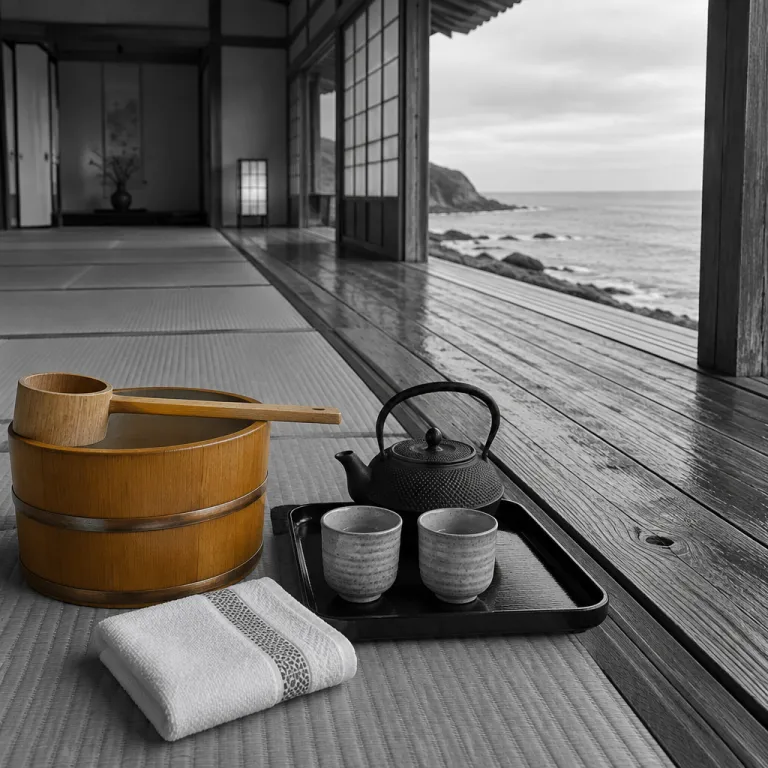
Why regional ryokan in Japan feel like a hidden form of luxury
Regional ryokan in Japan often sit far from train hubs, yet they define a quieter kind of luxury. When a ryokan has only a handful of rooms and looks over a rugged coast or forested valley, the staff can read your rhythm and adjust everything from meal timing to onsen access. That is where the idea of a regional ryokan Japan hidden retreat becomes real, because the landscape and the service slow you down together.
In these ryokans Japan feels less choreographed, and the hot spring culture becomes personal rather than performative. You might step from tatami rooms directly into open air baths, where the only sound is hot water falling into stone tubs and the wind moving through cedar. The same regional ryokan Japan hidden away from major cities will often pipe pure spring water into both indoor baths and private open decks, so you feel the temperature shift on your skin as the air cools at night.
Remoteness also changes how you book and how you think about a hotel stay in Japan. A luxury ryokan on a quiet coast or in a mountain area usually expects you to commit at least two nights, because the onsen rhythm, kaiseki dinners and slow breakfasts are designed as a sequence. When you plan a regional ryokan Japan hidden escape, you are not just reserving rooms ; you are choosing a pace, from the first hot spring soak to the last walk by the lake or river.
Coasts and valleys that reward the effort
The San'in coast on the Sea of Japan side is a textbook case of slow luxury, with ryokans that face empty beaches and fishing harbors instead of neon. In this area the air smells of salt and pine, and many onsen ryokans use local hot springs that bubble up just behind the dunes or in small river valleys. A regional ryokan Japan hidden along this shoreline will often have rooms open to the sea, so you hear waves under your futon rather than traffic.
Tohoku’s inland valleys offer a different mood, where snow, forests and hot water define the seasons. Here you find ryokans Japan travelers often overlook, with wooden corridors leading to air baths that frame maple trees or rice terraces, and with rooms private enough that you can step straight from tatami to your own private open tub. If Kyoto is your reference point for traditional Japanese stays, consider pairing it with a detour north, using a quiet luxury stay in the Kyoto countryside as a counterpoint to a more remote Tohoku onsen ryokan experience ; the contrast deepens both.
Farther south, inland Kyushu mixes volcanic hot springs with a softer, almost subtropical landscape. In these regions a luxury ryokan will often sit above a river or near a small lake, with open air baths that capture rising mist at dawn and clear star fields at night. The best regional ryokan Japan hidden in Kyushu lean into this geography, using local spring water in both shared baths and rooms private enough for long soaks between multi course dinners.
Onsen culture off the golden route: from Hakone to Arima
Hakone onsen is many travelers’ first encounter with hot springs, yet the most rewarding stays sit away from the main roads and day trip crowds. In the hills above the lake area you still find an onsen ryokan where rooms open to forest views, and where the only schedule that matters is the alternation between hot water and cool mountain air. Choosing a regional ryokan Japan hidden in these quieter corners of Hakone means accepting that the journey from Tokyo takes longer, but the baths feel infinitely more personal.
Arima onsen in the Kansai region offers another layer of depth, with its famous gold and silver hot springs flowing beneath a compact town. Here a traditional Japanese inn might have both indoor baths and open air tubs that use different mineral compositions, so you can feel how each spring water type sits differently on the skin. When you stay in one of the more intimate onsen ryokans rather than a large hotel, staff will often time your meals around your bathing pattern, letting the body cool between soaks.
Lake Kawaguchi and the wider Fuji lake area sit in a different category again, where views of Mount Fuji compete with the appeal of the water itself. Some ryokans Japan travelers choose here focus on panorama, with rooms private enough to frame Fuji at sunrise, while others lean into lakeside calm with hot spring baths close to the shore. If you are curious about how a single property can balance intimacy, design and onsen culture, study an in depth review of an intimate Japanese inn for refined hot spring stays ; it shows how a ryokan will often use architecture to choreograph every step between tatami, baths and the surrounding landscape.
Planning the detour: logistics, timing and how long to stay
Reaching a regional ryokan Japan hidden on a remote coast or in a mountain valley usually involves at least one transfer beyond the shinkansen. You might ride a local train along the Sea of Japan, then take a short taxi through rice fields, or connect by bus from a regional hub like Kanazawa or Fukuoka. That extra segment is not a nuisance ; it is the threshold where city noise falls away and the air changes, preparing you for the first onsen.
Because of this, one night rarely does these ryokans justice, especially when hot springs and kaiseki dinners are central to the experience. A two night stay lets you arrive in the afternoon, soak in both indoor and open air baths before dinner, sleep deeply, then repeat the next day without watching the clock. When you book, ask how many baths the property has, whether there are any rooms private with their own tubs, and how the spring water is sourced and rotated through the system.
Balancing a remote stay with city anchors in a two week itinerary is simpler than it looks. One effective pattern is to pair Tokyo and Kyoto with a single regional ryokan Japan hidden stay, perhaps near Hakone onsen, Arima onsen or the Fuji lake region, so you experience both urban energy and slow rural time. If you want a framework for evaluating which hotel or luxury ryokan truly merits that detour, use a guide that explains the questions that separate a great stay from a merely marketed one, and apply the same lens to both city hotels and countryside ryokans.
What changes when a ryokan is not managing tourist volume
In a small coastal or valley property, staff are not juggling bus tours, and that transforms the feel of every interaction. The team can adjust meal pacing to your appetite, quietly extend your use of certain baths when they are empty, and remember how you like your tea or sake without notes. This is where a regional ryokan Japan hidden away from major routes excels, because the service is built around individual guests rather than systems.
Architecture also shifts when a ryokan is not designed for volume, and that affects how you inhabit the space. Corridors may be shorter, rooms open directly to gardens or riverbanks, and private open decks with hot spring tubs replace large communal halls, so you move in a straight line from futon to water to fresh air. In these ryokans Japan feels close at hand, whether through the sound of a nearby lake, the scent of cedar in the baths, or the way spring water steams against cold night air.
Even the relationship between indoor and outdoor space changes in a luxury ryokan that serves fewer guests. You might have only a handful of shared baths, but each one is oriented toward a specific view, from a distant Fuji silhouette to a small, unnamed lake that locals know well. Over a couple of days in such a regional ryokan Japan hidden from mass tourism, you start to understand why the detour is not an add on to your trip ; it becomes the quiet center that everything else orbits.
FAQ
How many nights should I stay at a regional ryokan in Japan ?
For most regional ryokans Japan travelers should plan at least two nights. The first afternoon and evening allow you to settle into the onsen rhythm, while the second day lets you enjoy the baths and meals without travel fatigue. One night can work near Tokyo or Kyoto, but remote coasts and valleys reward a slower pace.
Are remote onsen ryokans difficult to reach without a car ?
Many regional ryokan Japan hidden in coastal or mountain areas are reachable by a combination of shinkansen, local trains and short taxi rides. Properties in Hakone onsen, the Kansai region near Arima onsen, or around the Fuji lake area often provide clear access instructions in English. When you book, ask the hotel to confirm the last train times and whether they can arrange a transfer from the nearest station.
What should I expect from the baths and hot springs at a luxury ryokan ?
A luxury ryokan will usually offer a mix of indoor baths, open air tubs and sometimes rooms private with their own hot spring facilities. The best onsen ryokans use natural spring water with minimal treatment, adjusting only temperature and flow. Expect clear guidance on bathing etiquette, separate times or spaces by gender, and the option to reserve private open baths if you prefer more seclusion.
How do I choose between a city hotel and a regional ryokan for my itinerary ?
City hotels in Tokyo or Kyoto work well as bases for museums, dining and shopping, while a regional ryokan Japan hidden on a coast or in a valley is better for rest and immersion in traditional Japanese hospitality. Many travelers pair two or three nights in each, using the ryokan stay as a reset between urban segments. Think of the ryokan as the part of the trip where you prioritize onsen time, seasonal cuisine and landscape over sightseeing checklists.
Is it worth staying near Lake Kawaguchi or the Fuji lake area for Mount Fuji views ?
Staying near Lake Kawaguchi or another Fuji lake gives you a higher chance of seeing Mount Fuji at dawn or dusk, when the air is clearer. Some ryokans Japan travelers choose here have rooms open to the mountain, while others focus more on lakeside calm and hot springs. If Fuji views are essential, confirm room orientation and ask how often the peak is visible in the season you plan to book.