Kyoto · Hotels
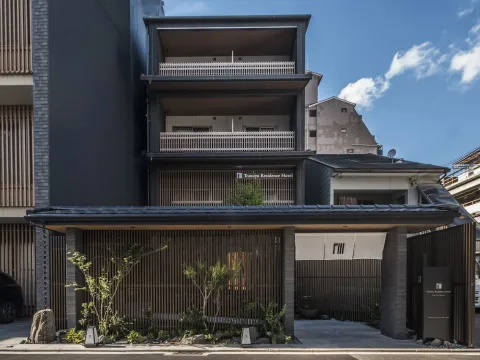
Tomoya Residence Hotel Kyoto
What convinced us is how much room Tomoya Residence Hotel gives its guests, in a...
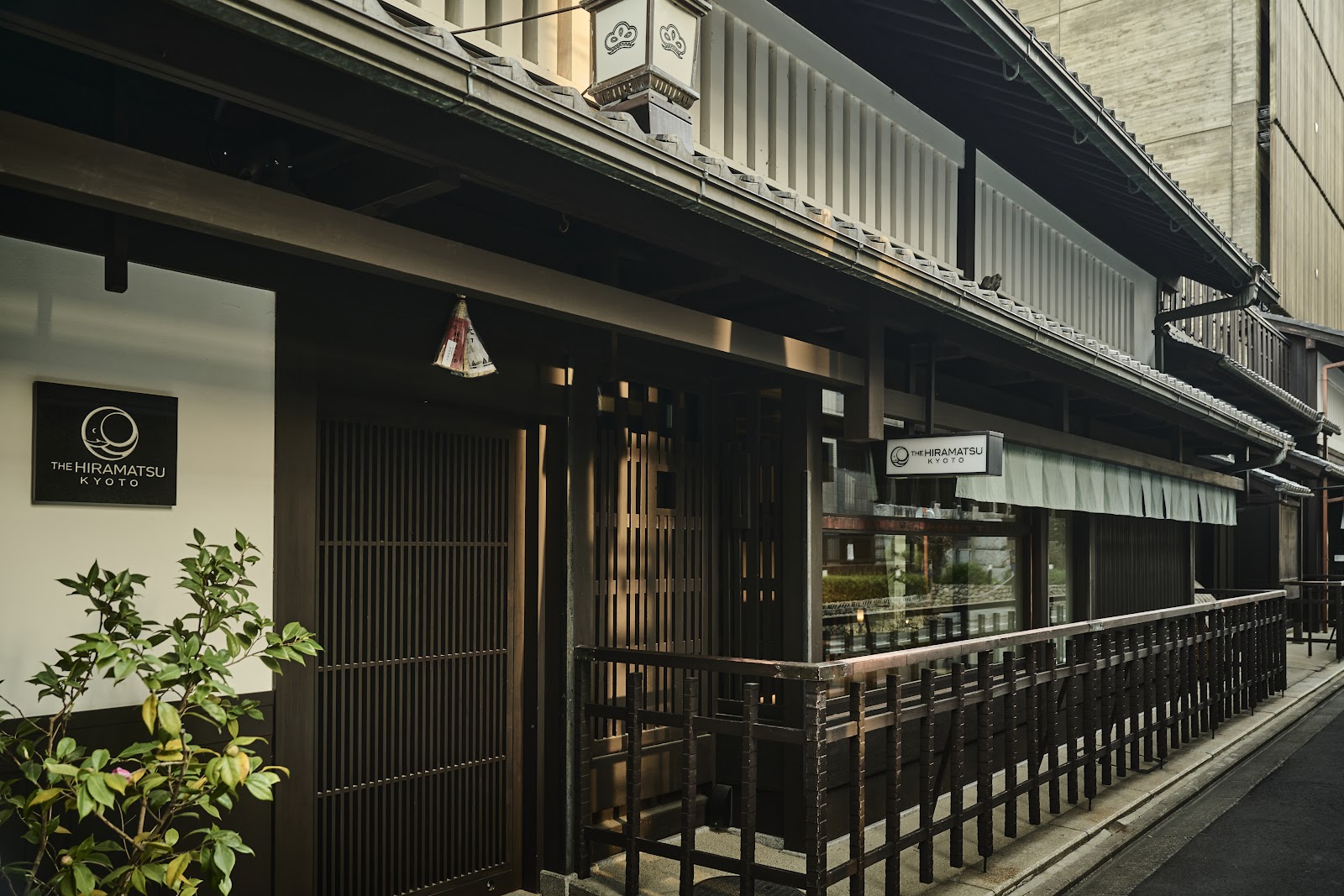
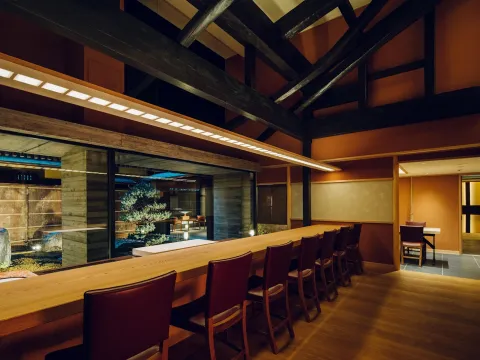
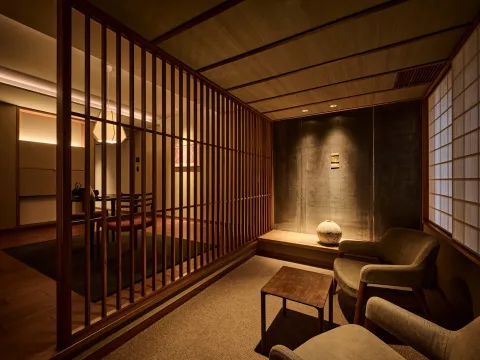
On Muromachi dori Sanjo Agaru, one of the Nakagyo ward’s most storied streets, a machiya townhouse built more than a hundred and twenty years ago once belonged to a kimono merchant whose trade helped define Kyoto’s reputation for textiles. A Kyoto master carpenter led its restoration into The Hiramatsu Kyoto, a twenty nine room hotel that keeps the building’s Meiji era bones, its timber frame, its narrow footprint, its interior gardens, while fitting in the comforts a contemporary stay requires. Nothing structural was invented: wherever the original timber could carry the building forward, it was kept, repaired and left visible rather than concealed behind drywall. The result favors restraint over spectacle, which in a city saturated with new luxury openings is its own kind of statement.
We chose The Hiramatsu Kyoto for travelers who want the atmosphere of a historic ryokan without sacrificing the privacy and service standards of a boutique hotel. The property draws on hannari, the local term for an elegance that is refined rather than ornamental, and that philosophy runs through everything from the twenty nine rooms to the two restaurants, neither of which tries to out shout the architecture around it. It is the kind of hotel that rewards a second and third stay, since details easy to miss on a first visit, a particular garden view, a seasonal dish, tend to surface later.
Muromachi dori sits within walking distance of Nijo Castle, the Nishiki Market and the Gion district, close enough to reach any of Kyoto’s major sights on foot or by a short taxi ride, yet quiet enough at street level that the hotel’s machiya facade barely registers among its neighbors. It is a location built for travelers who want to disappear into the old city rather than stay on its tourist perimeter, and the surrounding blocks still hold working textile shops and small family restaurants that have little reason to court visitors.
Price range: Upper luxury
Vibe: Refined machiya heritage, understated
Rooms: 29, across five categories from Superior to the Hiramatsu Suite
Best For: Travelers who want ryokan atmosphere with hotel level privacy
Our Favorite Thing About the Hotel: Washi paper details and miniature gardens built into the guest rooms themselves
Dining: Izumi (seasonal Japanese) and Ristorante la Luce (Kyoto inflected Italian)
Amenities: Hot tub, garden views, traditional machiya architecture
Attractions nearby: Nijo Castle, Nishiki Market, Gion
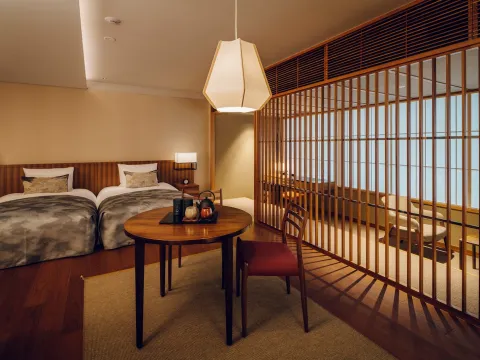
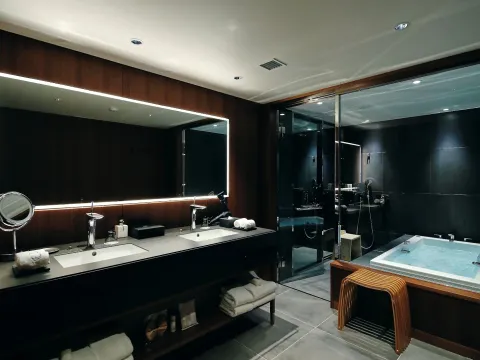
Each of the five room categories, from Superior up to the Hiramatsu Suite, carries its own interpretation of hannari: washi paper panels diffusing light rather than blocking it, a miniature garden visible from the bed or the bath, furniture that mixes contemporary lines with reclaimed timber from the original structure. None of the twenty nine rooms are identical, and the smallest differences, a different garden view, a different paper pattern, are the point rather than an afterthought. Bathrooms lean toward stone and dark wood, a deliberate contrast with the pale interiors elsewhere in the house.
Dinner here runs in two directions at once. Izumi serves Japanese cuisine built around the season, with views onto the hotel’s gardens built into the dining room itself, while Ristorante la Luce reinterprets Italian cooking through Kyoto’s own produce and sensibility, an unusual pairing that the hotel treats as entirely natural rather than a novelty. Either restaurant works as a reason to book a table even without staying the night, though guests get the better seat, and both kitchens change their menus with the city’s growing seasons rather than holding to a fixed card.
This is a hotel for travelers drawn to craft and quiet over scale: twenty nine rooms means limited availability, so book restaurant reservations and any seasonal room categories well ahead. Pair a stay here with time in the surrounding Nakagyo streets, since the hotel’s own argument is that the neighborhood, not just the building, is worth slowing down for. Guests arriving straight from Kyoto station should budget roughly fifteen minutes by taxi, a short ride into a noticeably quieter register of the city.
What convinced us is how much room Tomoya Residence Hotel gives its guests, in a...
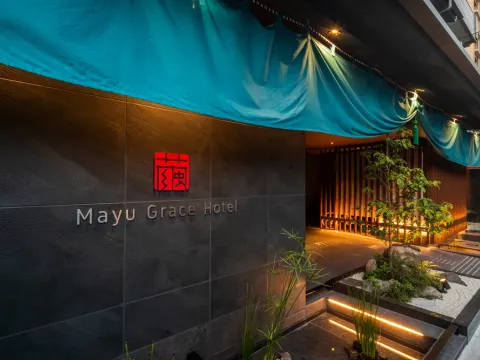
What won us over here is the thought behind every detail, starting with the name....
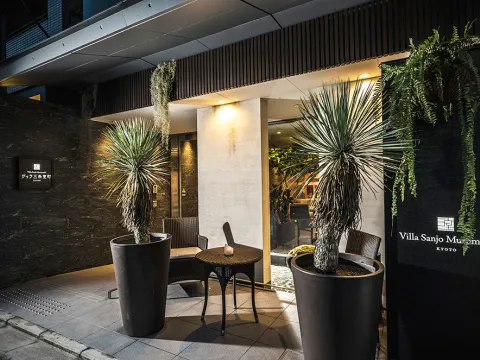
We liked Villa Sanjomuromachi Kyoto for how deliberately it sources its own interior: decorative paper...