Kyoto · Hotels
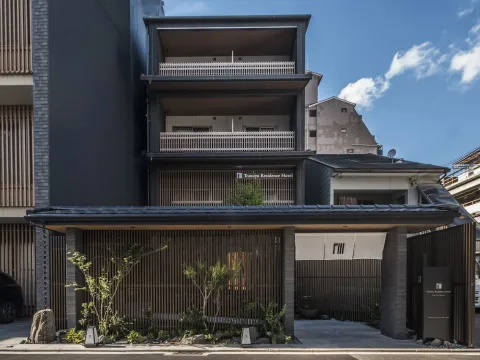
Tomoya Residence Hotel Kyoto
What convinced us is how much room Tomoya Residence Hotel gives its guests, in a...
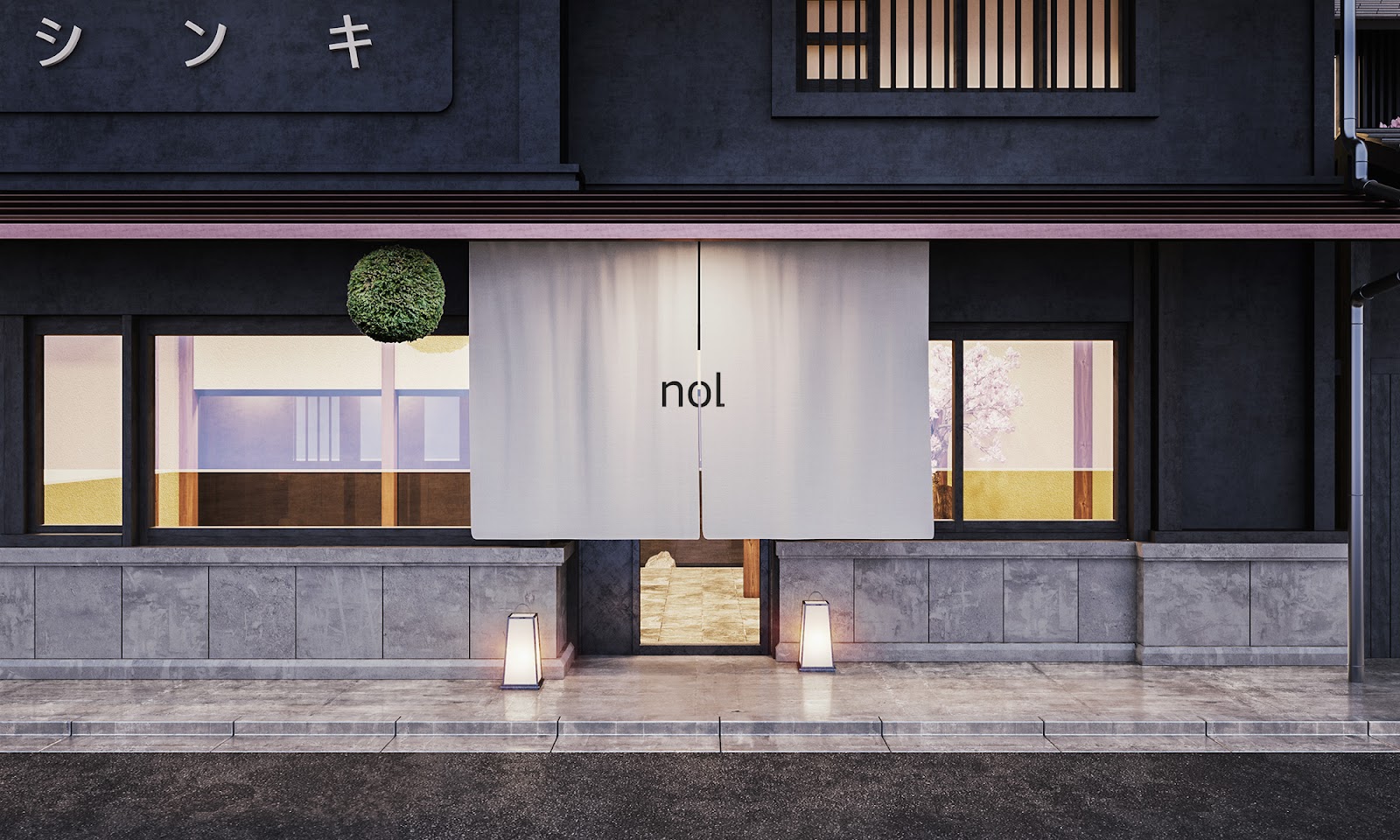
Long before it welcomed its first guest, this address on Sanjo-dori served as the sales house for the Kinshi Masamune sake brewery, a machiya built more than a century ago in the heart of Kyoto. Designer Shigeru Uotani, known for his careful renovations of the city's old townhouses, preserved the structure's heavy timber frame, its low beams, and its sense of hush, then connected it by a traditional walkway to a new 48-room wing built around a central tsubo-niwa courtyard. The garden is visible from nearly every floor, a quiet green anchor in a hotel that otherwise reads as resolutely urban. Walking in from the street, past the original machiya facade, still feels like stepping out of Kyoto's modern tempo and into something older and more deliberate.
We chose nol kyoto sanjo because it treats a heritage building as something to live inside rather than something to photograph. Every arriving guest is welcomed into the old machiya lounge with a pour of Kinshi Masamune sake, the house whose sales office once stood on this exact spot, a small ritual that ties the hotel to its own history without ever feeling staged. Upstairs, each room pairs a hinoki cypress soaking tub with a kitchenette and a washing machine, a combination that quietly serves longer stays as well as short ones. The result is a hotel that feels curated rather than converted, with heritage detail and everyday comfort working side by side instead of competing for attention.
The hotel sits at the intersection of Sanjo-dori and Sakaimachi, a stretch where Meiji-era storefronts and old machiya still outnumber anything built in the last fifty years. It is a five-minute walk from Karasuma-Oike subway station, which puts most of central Kyoto within easy reach without requiring a taxi. Nijo Castle and the lantern-lit lanes of Gion are both close enough for an evening walk, while the immediate neighborhood rewards slower exploration: small craft shops, old sake merchants, and family-run kitchens tucked into streets that have not changed their footprint in a hundred years. It is a location built for guests who want Kyoto's center without its crowds.
Price: EUR EUR EUR EUR / design heritage
Vibe: Converted machiya, quiet and tactile
Rooms: 48, across three tiers up to 50 square meters
Best For: Couples and design-minded travelers wanting a longer Kyoto stay
Our Favorite Thing About the Hotel: The hinoki cypress soaking tub in every room
Dining: No on-site restaurant; breakfast delivered from local, century-old kitchens
Amenities: In-room kitchenette and washing machine, central tsubo-niwa courtyard, welcome sake service, Iwata bedding
Attractions: Karasuma-Oike subway station, Nijo Castle, Gion, the Sanjo-dori machiya streetscape
The 48 rooms split into three categories, each built around the same hinoki cypress tub but at a different scale. Four Tsuboniwa Suites, at 50 square meters, give the bath its own alcove separated from the bedroom by a movable wall, so the room can open up or close off depending on the moment. Thirty-four Hibaburo Deluxe rooms, the backbone of the hotel at 39 square meters, keep the same cypress tub closer to the sleeping area. Ten compact Tsuboyu Superior rooms, at 26 square meters, integrate a smaller version of the bath directly into the bedroom footprint. Across all three, the material language stays consistent: dark, low lighting, warm wood tones, and bathroom surfaces in slate and granite that read as deliberate rather than decorative.
There is no restaurant on site, and that is by design rather than an oversight. Breakfast arrives each morning from two long-standing local kitchens: a traditional set from Kyonaaji no Mura, and Western-style plates and sandwiches from Kohii Nakatani, a neighborhood cafe that has been serving this corner of Kyoto for generations. It is a model that trades an in-house dining room for a more direct connection to the city around it, and guests who want a hotel restaurant for every meal should plan accordingly. Combined with the welcome sake in the machiya lounge, it is a hotel that prefers to send guests out into the neighborhood rather than keep them inside.
What convinced us is how much room Tomoya Residence Hotel gives its guests, in a...
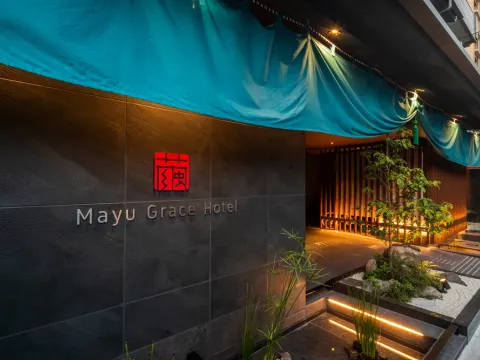
What won us over here is the thought behind every detail, starting with the name....
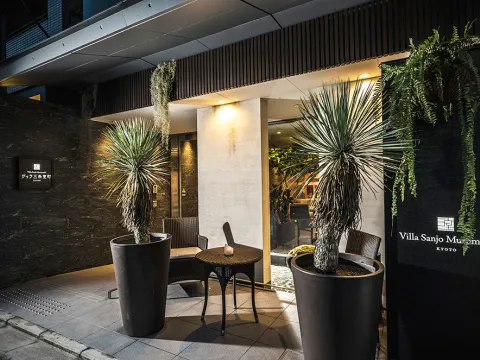
We liked Villa Sanjomuromachi Kyoto for how deliberately it sources its own interior: decorative paper...