Kyoto · Hotels
Tomoya Residence Hotel Kyoto
What convinced us is how much room Tomoya Residence Hotel gives its guests, in a...
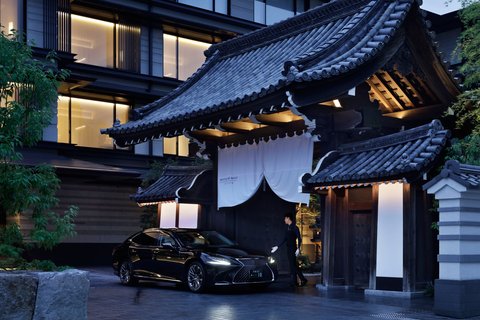
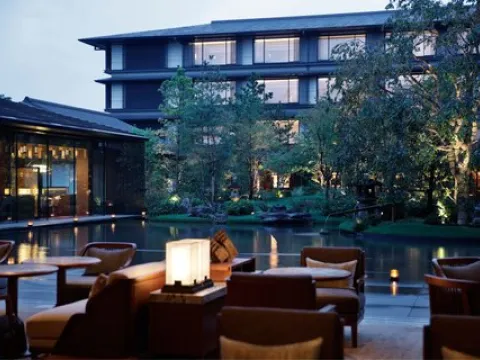
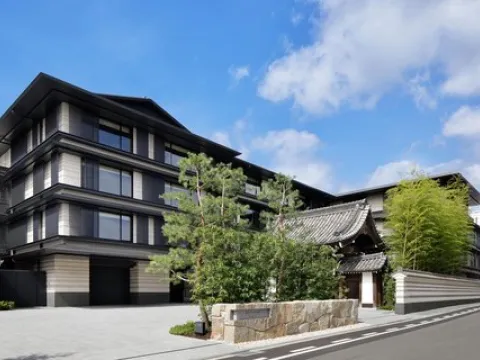
Opposite Nijo Castle, on land the Mitsui family held for more than 250 years, Hotel The Mitsui Kyoto opens through a 300-year-old gate restored by local artisans, its weathered wood given a dark silver-gray patina rather than replaced. Beyond it, a bamboo grove leads into a courtyard garden by landscape master Shunsaku Miyagi, and only then does the hotel itself appear. Designer André Fu built the interiors around that sequence rather than around it, treating landscape and hospitality, in his words, as a single experience instead of a lobby followed by a view.
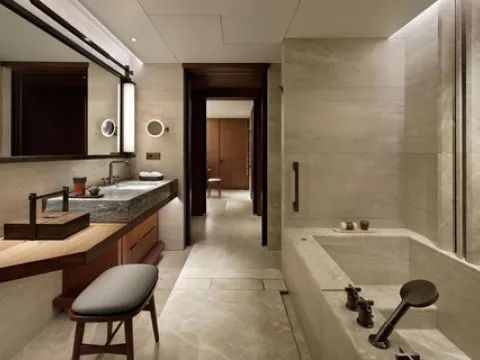
We chose this hotel because it does something no other property in Kyoto can: it sits on a genuine natural hot spring, and every one of the 161 rooms has its own rough-cut stone onsen tub fed by it. That single fact would justify the stay, but it arrives alongside a restored Edo-era gate, a UNESCO-adjacent address across from Nijo Castle, and interiors that reference bamboo hedges and torii gates without copying either. It is rare for a hotel this large to feel this specific to one place.
Nakagyo Ward puts the hotel directly across from Nijo Castle's moat, inside the historic core of Kyoto rather than on its edge, with the covered Nishiki Market and the Kamo River both a short walk away. The address trades the temple-dense quiet of Higashiyama for proximity to the castle, the old merchant streets and central Kyoto's restaurants, which makes it the more practical base for guests splitting a stay between sightseeing and evenings out.
Prix: €€€€
Vibe: refined, contemporary Kyoto, quietly grand
Chambres: 161, including two Onsen Suites with private outdoor baths
Best For: travelers who want a genuine onsen experience without leaving central Kyoto
Our Favorite Thing About the Hotel: soaking in a rough-cut stone tub filled by the hotel's own hot spring, in-room, at any hour
Dining: on-site restaurant and bar, room service, special diet menus on request
Amenities: natural hot spring, spa and wellness centre, fitness centre, courtyard garden, valet parking
Attractions: Nijo Castle across the street, Nishiki Market, the Kamo River, Nijo-jo-mae subway station
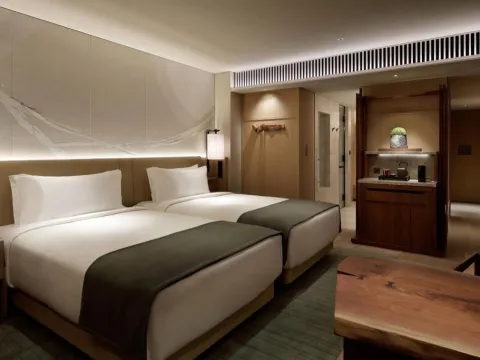
The 300-year-old Kajiimiya Gate was restored rather than rebuilt, its timber left with the dark patina of age instead of a fresh finish, and it sets the tone for everything behind it. André Fu's interiors pick up the site's own vocabulary: angular timber slats standing in for bamboo hedges, slanted oak forms echoing a torii gate's threshold, walnut furniture, woven textiles by kimono designer Jotaro Saito and handmade washi lampshades. None of it quotes traditional Kyoto directly, but all of it comes from looking at the place first.
Natural hot-spring water reaches all 161 rooms through rough-cut stone tubs, turning what is usually a shared, scheduled ritual elsewhere in Japan into something private and available on demand. The two Onsen Suites go further, each with its own private garden and outdoor hot-spring bath, and the hotel's spa and wellness centre extends the same idea into treatment rooms for guests who want more than a soak.
The address favors guests prioritizing Nijo Castle, central Kyoto and easy transit over the temple-lined lanes of Higashiyama or Arashiyama, so it suits a stay built around the city center rather than one centered on a single historic district. With 161 rooms, it carries more of a grand-hotel scale than Kyoto's smaller ryokan-style properties, which is worth knowing for travelers specifically seeking an intimate, few-room stay instead.
What convinced us is how much room Tomoya Residence Hotel gives its guests, in a...
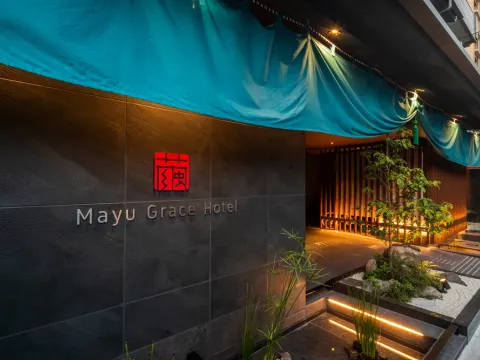
What won us over here is the thought behind every detail, starting with the name....
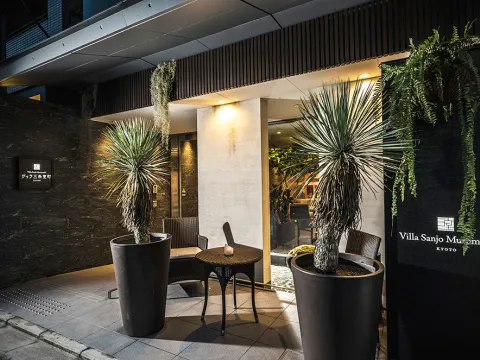
We liked Villa Sanjomuromachi Kyoto for how deliberately it sources its own interior: decorative paper...