Planning a stay by Mount Fuji ? Discover how to choose the best hotels in the Fujikawaguchiko Lake Kawaguchiko area, from Fuji view rooms to onsen and access.
Why the Fujikawaguchiko lake area is worth your stay
Morning mist over Lake Kawaguchiko, Mount Fuji emerging slowly behind it ; this is the image that defines the area. If you are choosing a hotel in Fujikawaguchiko, you are essentially choosing your relationship to that view of Fuji. Some guests want the iconic postcard angle, others prefer a quieter lakeside stay with more space and fewer cameras pointed at the same spot.
The lake area is compact enough to feel walkable around the central part, yet varied in mood. Around the north shore, where many kawaguchiko hotel options cluster, you get some of the best hotels for direct Fuji views from rooms and open air baths. Closer to the eastern side, the atmosphere softens ; more residential, more trees, fewer tour buses. Both sides share the same asset though : the water and the mountain always in dialogue.
For a first stay, the Fujikawaguchiko popular strip between Kawaguchiko Station and the lakeside makes logistics easy. You can arrive by train or bus, drop your luggage, and be on the promenade in minutes. If you return for a second or third visit, you may prefer a more secluded hotel fujikawaguchiko location, slightly away from the main road, where the only sound at night is the lake itself.
Choosing your location around Lake Kawaguchiko
Distances here look small on the map but feel different on foot. From Kawaguchiko Station to the north shore hotels is roughly 1,5 to 2 km, a 20 to 25 minute walk if you are not carrying heavy luggage. Staying near the station gives you a central location for buses, taxis, and the sightseeing loop, but you sacrifice the immediate lakeside calm. It suits guests who plan day trips and late returns more than those who want to linger on their balcony.
The north shore, roughly between the Oishi Park area and the central lakeside promenade, is where many travelers find their ideal Fuji lake stay. Here, rooms often face directly towards Mount Fuji, and you can step out for sunrise or blue hour without planning a full excursion. The trade-off ; this side can feel busy in peak seasons, with coaches stopping along the main road and previous visitors returning year after year for the same view.
On the opposite shore, the mood changes. Hotels are more spread out, the road is quieter, and the views mount Fuji are often more diagonal, with more foreground trees and less urban structure. If you value privacy and a slower rhythm over the most dramatic view mount Fuji, this side can be a good choice. It is also where a private stay feels genuinely secluded, especially in properties set slightly uphill from the lake.
Room types, layouts and the Fuji view question
Not every room in Fujikawaguchiko faces the mountain. That is the first thing to verify before booking. Many hotels offer a clear distinction between Fuji view rooms and lake view or town view categories, and the difference in experience is significant. A room that lets you view Fuji directly from your bed or from a private terrace changes the entire rhythm of your stay ; you watch the clouds move instead of checking your phone.
Traditional Japanese-style rooms with tatami and futon are common around Lake Kawaguchiko, often combined with a low table and floor chairs facing a large window. Western-style rooms with beds and sofas are increasingly available, sometimes in mixed Japanese-Western layouts. When you check availability, look carefully at the room descriptions ; some mention partial Fuji views, others specify that only certain floors or wings face the mountain.
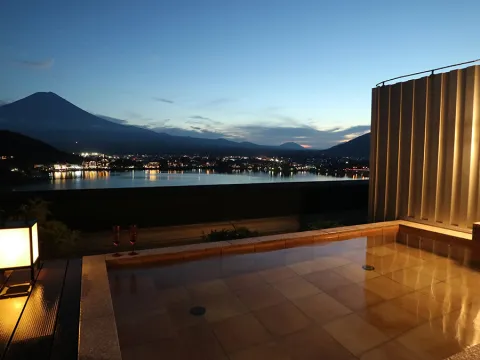
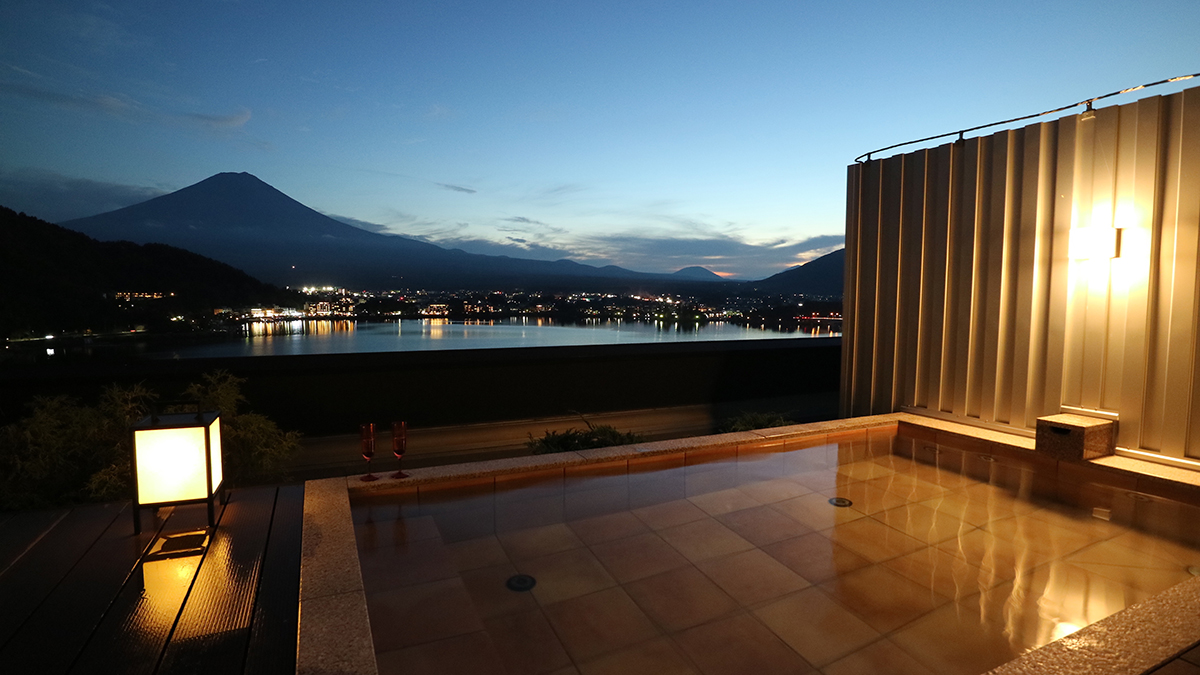
For guests who value bathing rituals, rooms with private open air baths are the quiet luxury of this area. Soaking in an onsen tub on your balcony while Mount Fuji appears and disappears behind clouds is the defining Fujikawaguchiko experience. These rooms are limited, so they tend to be booked early by previous guests who already know their preferred side of the building. If you do not secure one, shared baths with large windows or rooftop terraces can still offer strong Fuji views without the same level of privacy.
Onsen culture, open air baths and seasonal moods
Steam rising from an open air bath while the air is crisp and cold ; this is when Fujikawaguchiko feels at its most cinematic. Many hotels in the area are built around onsen culture, with indoor and outdoor pools, sometimes separated by gender and rotated by time slots. The best hotels design their baths to frame the mountain subtly rather than turning them into a spectacle, letting the view mount Fuji appear as part of the landscape, not as a backdrop.
Season matters more here than in many other Japanese destinations. In winter, snow on the peak and clear skies give you some of the sharpest Fuji views, but moving between baths and rooms requires a tolerance for cold corridors and brisk walks. Spring brings cherry blossoms along the lakeside path near the north shore, while autumn paints the hills behind the lake Kawaguchiko area in deep reds and golds. Summer is lush, sometimes hazy ; the mountain can hide for hours, but evenings by the water are soft and warm.
For a stay focused on relaxation, choose a kawaguchiko hotel where the onsen area feels calm even when the property is full. Look for layouts with multiple pools, quiet corners, and perhaps a small relaxation lounge facing the lake Kawaguchi shore. Guests who treat bathing as a daily ritual rather than a quick photo opportunity will appreciate hotels that provide thoughtful details ; well-designed changing rooms, clear etiquette signage, and a natural flow between indoor and open air spaces.
Atmosphere, service style and who this area suits best
Even within a compact area, the atmosphere of Fujikawaguchiko hotels varies widely. Some properties lean into a classic ryokan rhythm ; set meal times, structured kaiseki dinners, and staff guiding you gently through each step. Others adopt a more contemporary resort style, with flexible dining, lounge spaces, and a quieter, almost minimalist approach to service. Your ideal stay depends on how much structure you want in your day.
Couples and solo travelers often gravitate towards smaller properties with fewer rooms, where staff quickly recognize returning guests and remember preferences from previous stays. Families may prefer larger hotels with more facilities, easier access to Kawaguchiko Station, and rooms that can comfortably accommodate extra futons. If you are traveling with friends, consider whether you want shared tatami rooms or separate Western-style rooms connected by a corridor ; the social dynamic changes subtly with each layout.
This area suits travelers who are willing to slow down. If your priority is nightlife or dense urban energy, Fuji Kawaguchiko will feel quiet after dark. But if you value early mornings, long baths, and watching the light shift over the lake, the hotel fujikawaguchiko lake area is a good match. It is also a strong choice for a two-night pause between Tokyo and the Alps, giving you time to reset your pace before moving on.
Practical details: access, movement and what to verify before booking
Arrival usually funnels through Kawaguchiko Station, the small but busy hub at the edge of town. From here, taxis line up in front of the building, and the sightseeing buses loop around the lake in clearly marked routes. If your hotel is not within walking distance, confirm whether they offer a shuttle at fixed times or if you will rely on taxis, especially if you are arriving with luggage or late in the evening. The last stretch of the journey can shape your first impression more than you expect.
Before finalizing your booking, verify a few non-negotiables. First, the exact orientation of your room ; lake view, Fuji view, or town view, and on which floor. Second, the configuration of beds or futons, especially if you are tall or traveling with older guests who may find floor bedding challenging. Third, the onsen setup ; whether there are open air baths, any time restrictions, and whether tattoos are accepted or require covering. These details rarely appear clearly in quick summaries, but they define the comfort of your stay.
Movement around the lake is straightforward but not instantaneous. Walking from the central lakeside promenade near the main road to quieter stretches near Oishi Park can take 30 to 40 minutes one way. If you plan to explore multiple viewpoints, factor in the sightseeing buses or consider renting bicycles. Guests who underestimate distances sometimes end up spending more time in transit than in their rooms, which is a pity in a place where the hotel itself is part of the destination.
How the Fujikawaguchiko lake area compares to other Fuji stays
Staying by Lake Kawaguchiko is not the only way to see Mount Fuji, but it is arguably the most balanced. Compared with areas closer to the mountain’s base, Fujikawaguchiko offers a wider range of hotels, from intimate lakeside retreats to larger properties with extensive facilities. You trade the drama of being right on the slopes for the serenity of water and mountain together, which many guests find more restful. The classic Fuji view across the lake is also easier to enjoy repeatedly from your room or bath.
Other Fuji lake areas, such as those around Lake Yamanakako, can feel quieter and more residential, with fewer dining options within walking distance. Fujikawaguchiko, by contrast, gives you a compact cluster of cafés, small restaurants, and convenience stores along the main road, especially between the station and the lakefront. This makes it a good choice if you prefer to keep some flexibility in your meals rather than committing to full-board stays every night.
For travelers deciding between a short Fuji stopover and a longer stay, two nights in the Fujikawaguchiko lake area often strike the right balance. One night can feel rushed, especially if clouds hide the mountain during your brief window. With two or more nights, you increase your chances of clear Fuji views and have time to enjoy both the hotel and the surroundings without watching the clock. In other words, you allow the place to unfold at its own pace, which is ultimately what this destination rewards.
Best Hotels in Fujikawaguchiko Lake Area
The best hotels in the Fujikawaguchiko lake area are those that align precisely with your priorities ; a clear Fuji view from your room, a refined onsen experience, or a quiet, private atmosphere slightly away from the main road. Properties along the north shore typically offer the most direct views of Mount Fuji across Lake Kawaguchiko, while those on the opposite shore trade a frontal view for greater seclusion and softer, more residential surroundings. Before you book, verify the exact room orientation, the presence of open air baths, and the distance from Kawaguchiko Station, as these three factors will shape your stay more than any other detail.
FAQ
Is the Fujikawaguchiko lake area a good base for seeing Mount Fuji?
Yes, the Fujikawaguchiko lake area is one of the best bases for seeing Mount Fuji because it combines wide, unobstructed views across the water with a dense concentration of hotels and easy access from Kawaguchiko Station. You can enjoy the mountain from your room, from lakeside paths, and from onsen baths, rather than relying on a single viewpoint or a short excursion.
Which side of Lake Kawaguchiko offers the best Fuji views from hotels?
The north shore of Lake Kawaguchiko generally offers the most iconic, frontal views of Mount Fuji from hotel rooms and terraces. Many properties on this side are oriented directly towards the mountain, while hotels on the opposite shore often provide more diagonal or partially framed views in exchange for a quieter, more secluded atmosphere.
How many nights should I stay in Fujikawaguchiko?
Two nights is usually the ideal length for a stay in Fujikawaguchiko, giving you enough time to experience both the hotel and the lake while increasing your chances of clear weather for Fuji views. A single night can feel rushed, especially if clouds cover the mountain during your arrival or departure window.
Do all hotels in Fujikawaguchiko have onsen and open air baths?
Not all hotels in Fujikawaguchiko have onsen facilities, and even fewer offer private open air baths attached to rooms. Many properties do feature shared indoor and outdoor baths, but if a private onsen is important to you, you should specifically look for rooms that mention a private open air tub or terrace bath in their description.
Is it necessary to stay near Kawaguchiko Station?
Staying near Kawaguchiko Station is convenient for transport and day trips, but it is not essential if your priority is a lakeside or Fuji-facing stay. Hotels closer to the lake often provide a more tranquil atmosphere and better views, and you can still reach them easily by taxi, shuttle, or the sightseeing buses that circulate around the lake.