Kyoto · Hotels
Riverte Kyoto Kamogawa
We selected this hotel for a single number: eight. Riverte Kyoto Kamogawa takes only eight...
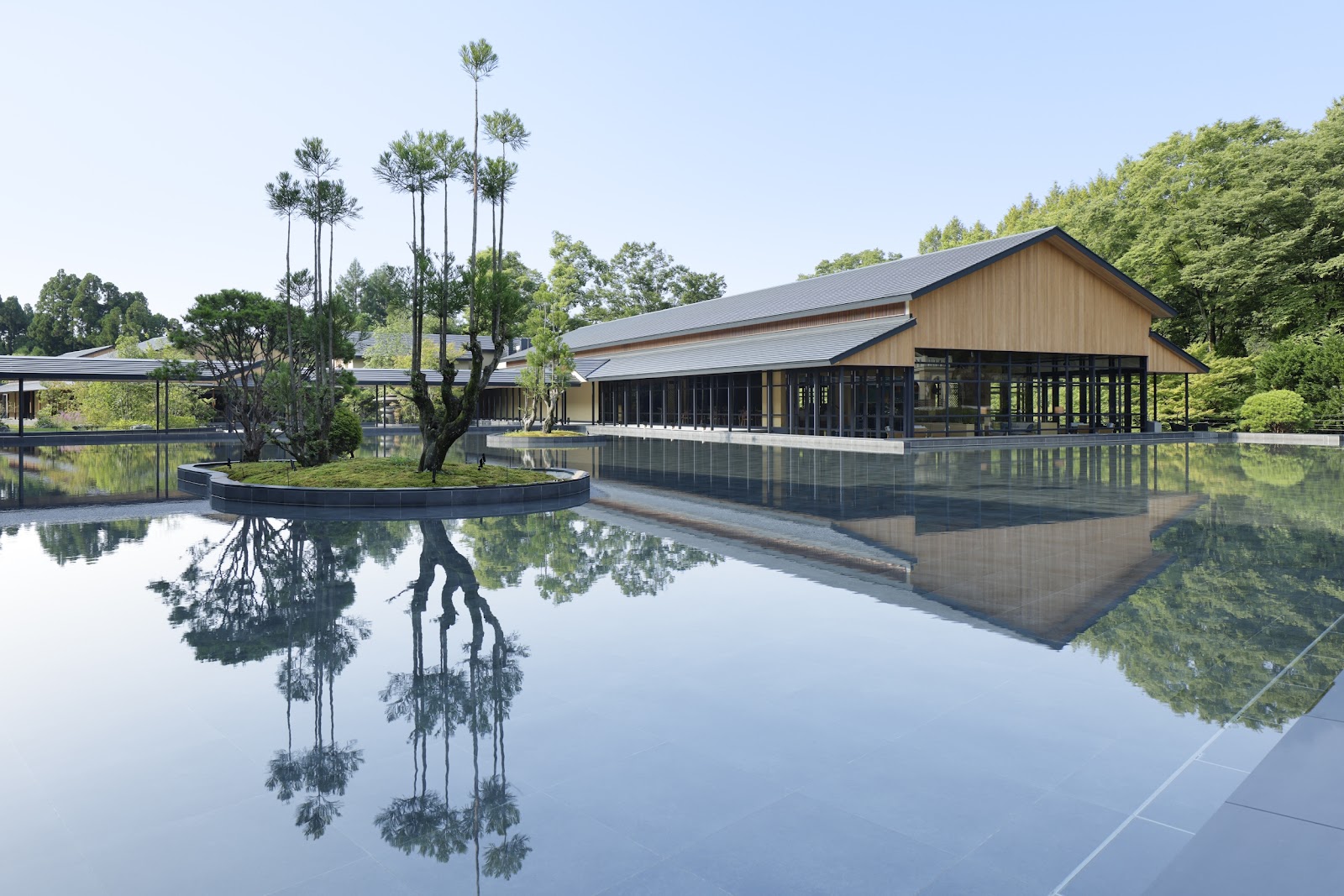
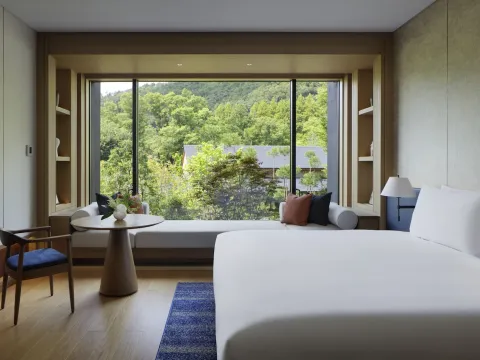
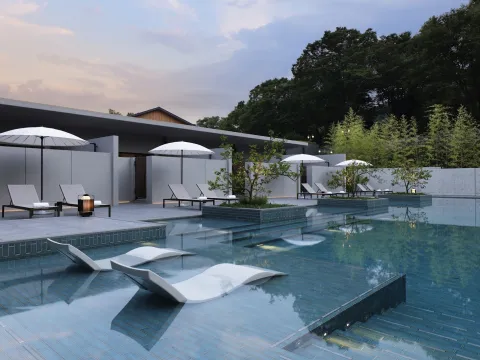
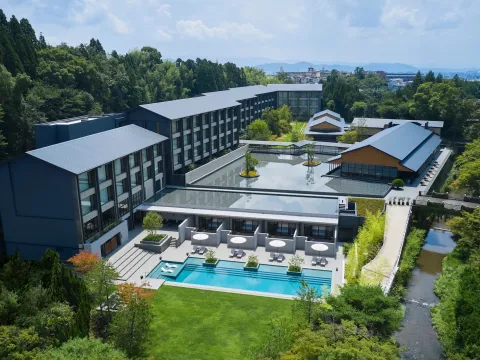
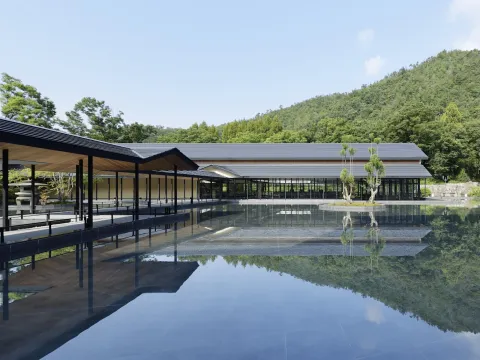
Twenty five minutes north of the temples and crowds of central Kyoto, the Takagamine hills still carry the name of Hon’ami Koetsu, the Edo period swordsmith, calligrapher and ceramicist who persuaded the shogunate to grant him this land in the early seventeenth century and turned it into a working community of artists, potters and lacquerware makers. Roku Kyoto, part of Hilton’s LXR Hotels and Resorts collection, sits on ground shaped by that history, and it treats a heritage story as a structural idea rather than a lobby plaque. The 114 rooms are built from gray granite, pale wood and expanses of glass that blur the line between interior and forest, and the result reads closer to a contemporary art retreat than a conventional luxury hotel.
We chose Roku Kyoto for travelers who already know the city’s temple circuit and want the version of Kyoto that locals protect for themselves: distance from the crowds, architecture that does not shout, and a working connection to the crafts the region is actually known for. The property’s own ateliers for washi paper and porcelain are not a spa menu afterthought, they continue what Koetsu’s colony did here four centuries ago, and that continuity gives the stay a point of view most countryside luxury resorts lack.
The Takagamine district trades the walkability of Gion or Higashiyama for genuine quiet: the nearest train station is a seventeen minute walk, and most guests arrive by taxi or the hotel’s own transfer. What that isolation buys is a view uninterrupted by other buildings, a slower pace built into the architecture itself, and proximity to Kinkaku ji, the Golden Pavilion, close enough for an early morning visit before the coach groups arrive.
Price range: Upper luxury
Vibe: Minimalist, artisan, quietly contemporary
Rooms: 114, from 538 square feet
Best For: Design minded travelers seeking a quiet countryside base
Our Favorite Thing About the Hotel: The thermal onsen pool framed by manicured gardens and mountain ridgelines
Dining: Tenjin, French Japanese tasting menus
Amenities: Thermal onsen, washi paper and porcelain workshops, spa, fitness centre
Attractions nearby: Kinkaku ji (the Golden Pavilion), Takagamine hiking trails
The resort’s thermal pool is sized more like a reflecting pond than a hotel spa feature, and it is positioned so that bathers face the garden and the hills beyond rather than the building itself. Steam rises against granite and clipped pine in a composition that changes with the season, and the pool draws as much from the aesthetics of a traditional Japanese garden as from the conventions of hotel wellness.
Dinner at Tenjin runs on a prix fixe format that pairs French technique with Kyoto’s seasonal produce and seafood, a pairing more commonly found at destination restaurants than resort dining rooms. The kitchen’s ambition occasionally outpaces its execution on a busy night, so this is a meal worth booking early rather than treating as a formality. Guests can also book private sessions in washi papermaking or porcelain work led by local artisans, a direct echo of the crafts Koetsu’s original colony practiced on this same ground, priced modestly against the room rate.
This is a resort for travelers who prioritize architecture, craft and quiet over proximity to Kyoto’s temple circuit: budget for taxis or a private transfer, and treat the distance from downtown as the property’s main selling point rather than its drawback. Pair a stay here with two or three nights closer to Gion for a Kyoto trip that covers both registers of the city.