Planning a coastal stay in Okinawa ? Discover how to choose the best hotels in Onna, from beach access and pools to spa rituals and room types, with clear, expert guidance.
Why Onna is one of Okinawa’s most desirable coastal bases
Coral shelves just off the sand, a road that hugs the sea, and a string of low-rise resort hotels facing west towards the sunset. Onna, on the western coast of Okinawa’s main island, is built for slow days and long evenings by the water. It is not a city break. It is a beach corridor, stretching roughly between Cape Maeda and Cape Manzamo, where almost every good hotel or resort hotel is oriented towards the East China Sea.
Compared with Naha or Chatan, Onna feels quieter and more self-contained. Guests tend to stay within their chosen hotel resort for much of the day, moving between pool, spa, terrace bar, and the beach. That makes your choice of property in Onna Japan unusually decisive ; the hotel will shape most of your stay. The best hotels here lean into this, offering extensive facilities, outdoor swimming pools, and direct access to small coves or long arcs of sand.
For travellers focused on snorkelling, family-friendly swimming, and resort Okinawa comforts rather than nightlife, Onna is a wonderful base. Those who want izakaya-hopping or late-night shopping will be better served by a night hotel in Naha and then a transfer north. Think of Onna as your coastal retreat : a place where you check availability carefully, settle in for several nights, and let the rhythm of the tides set your schedule.
How the coastline is structured – and what that means for your stay
Rocky headlands, pocket beaches, and man-made coves define this stretch of Okinawa Onna. The coastal Route 58 runs almost the entire length of the village, with hotels on the sea side and low hills on the other. Some properties sit directly on natural sand, others front protected lagoons or elevated terraces above the reef. When you compare Onna hotels, this detail matters more than the number of stars.
A resort hotel on a natural beach offers a softer, more organic feel, with the sound of waves carrying into the room at night. In contrast, hotels built around sheltered inlets or artificial beaches often provide calmer water for children and better conditions for stand-up paddleboarding, but less of that wild-sea atmosphere. Before you book any hotel Onna option, check how the shoreline looks on a map or satellite view, not just in carefully framed photos.
Distances are another quiet factor. From the southern edge near Maeda, it is around 20 km along Route 58 to the northern reaches close to Manzamo. If you plan to dive at Cape Maeda at dawn, staying in the southern cluster of hotels Onna makes early starts easier. If your focus is driving further north towards Nago or the Motobu peninsula, a base in the northern part of Onna will cut down your time in traffic, especially in high season.
Choosing between large resorts and more intimate properties
Expansive lobbies, multiple restaurants, and broad swimming pool decks dominate the larger resorts along this coast. These properties suit guests who want everything on site : spa, kids’ club, fitness facilities, perhaps a small shopping arcade. You trade a little privacy for convenience, but for families or multi-generational groups, the balance is usually good. The atmosphere is relaxed rather than ostentatious, in line with Okinawa’s softer take on luxury.
Smaller onna hotel options, often with fewer rooms and a simpler layout, appeal to couples or solo travellers who value quiet over choice. You may have a single pool instead of several, or a compact spa rather than a sprawling wellness wing, but you gain a calmer terrace, fewer crowds at breakfast, and a more personal rhythm. These hotels can feel particularly peaceful at night, when the only sound is the sea and the occasional car on Route 58.
When comparing the best hotels in Onna Okinawa Japan, decide first how much you plan to leave the property. If you expect to dine out frequently, explore nearby beaches, or drive to different parts of Okinawa, a smaller base with easy parking and quick road access can be more practical. If your ideal resort Okinawa experience is to arrive, unpack, and barely touch your car keys until departure, a full-scale hotel resort with extensive facilities will serve you better.
Beaches, pools, and the reality of “sea view” in Onna
Fine, pale sand is not guaranteed along every metre of this coast. Some stretches, such as the area around Moon Beach, offer a classic crescent of sand framed by palms and low buildings. Others rely on carefully maintained man-made beaches, which can still be wonderful for swimming and sunbathing but feel more controlled. When you read hotel reviews, pay attention to how guests describe the beach access rather than just the word “beachfront”.
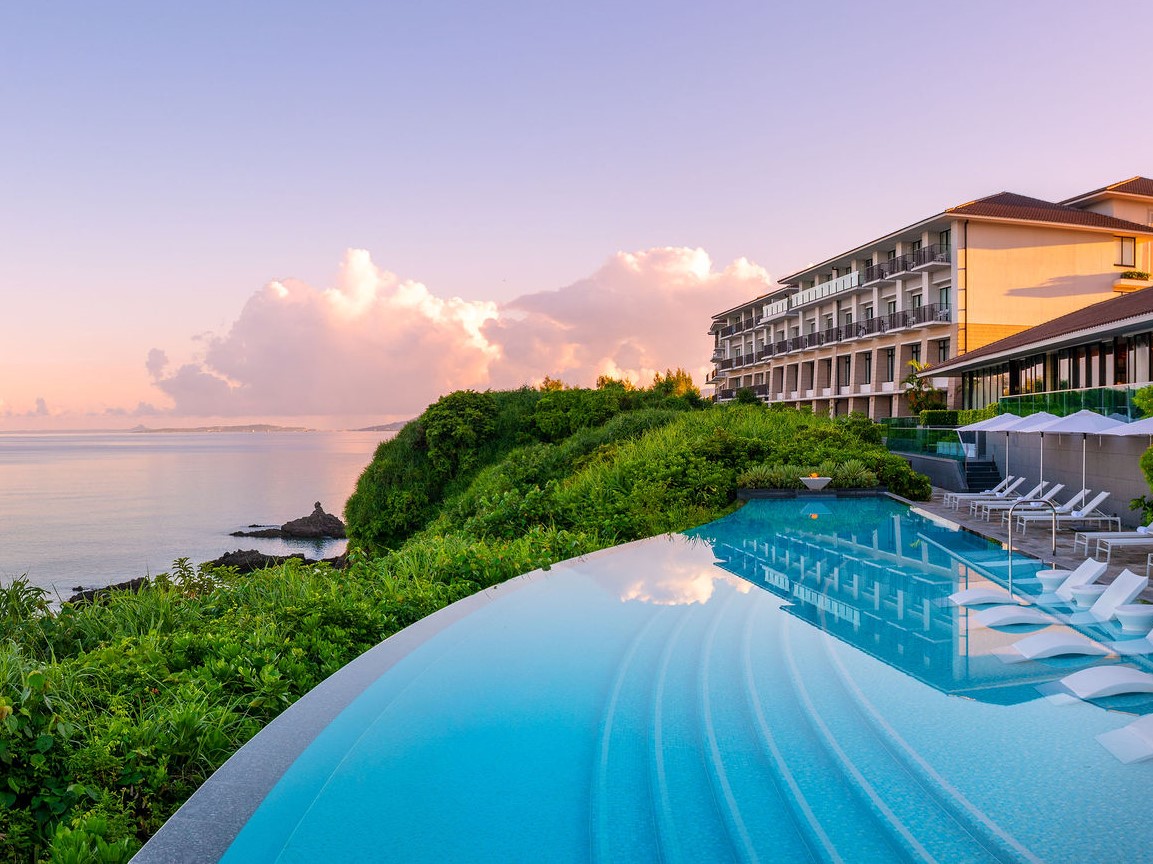
Most higher-end Onna hotels feature at least one outdoor swimming pool, often with a shallow section for children and a deeper lane for adults. A few properties add an indoor pool, useful during typhoon season or on windy days when the sea is rough. Pool design varies : some are simple rectangles, others curve around terraces with sea views and shaded cabanas. If you are a serious lap swimmer, check the pool length and opening hours before you book.
Sea view rooms also deserve a closer look. In some hotels, “ocean view” means a full, unobstructed panorama from bed to horizon. In others, it may be a partial glimpse between buildings or over a car park. For a stay that feels truly coastal, prioritise rooms that face west directly, ideally with a private terrace where you can watch the light change over the water at night. That small detail often does more for your sense of place than an extra half star.
What to expect inside the rooms and around the spa
Interiors in Onna’s better properties tend to mix Okinawan materials with contemporary Japanese minimalism. Expect pale woods, neutral fabrics, and occasional references to local craft rather than heavy tropical décor. Rooms are generally spacious by Japan standards, especially in resort hotels, with many starting around 30 m² or more. Families often find that twin rooms with extra beds work well, avoiding the need for separate connecting rooms.
Bathrooms vary widely. Some older hotels still feature compact units with shower-over-bath arrangements, while newer or renovated rooms may offer separate bathtubs and walk-in showers, sometimes with a window towards the sea. If long baths are part of your ritual, check photos carefully. A few higher-category rooms include outdoor soaking tubs on the balcony, which can transform a simple night into a quietly memorable experience.
Spa facilities are a strong point in many Onna hotels. You will often find treatment menus that incorporate Okinawan ingredients such as sea salt, brown sugar scrubs, or local essential oils. Some properties include public baths or wellness areas that echo onsen culture, even if the water is not from a natural hot spring. For guests who value daily rituals of sauna, soak, and massage, it is worth choosing a star hotel where the spa is a central feature rather than an afterthought.
Location nuances: from Cape Maeda to Manzamo
Cliff paths, dive boats, and early-morning activity define the southern end of Onna near Cape Maeda. This area is a hub for snorkelling and diving, with easy access to the famous Blue Cave. Staying here suits guests who want to be on the water soon after sunrise and who do not mind a slightly busier feel during the day. The trade-off is that some hotels sit on rocky shoreline rather than broad sandy beaches, so pool time becomes more important.
Further north, around the stretch leading towards Cape Manzamo, the mood shifts. The coastline opens up, with more sweeping views and a slightly more secluded atmosphere once day-trippers leave. This is where you find several of the most established resort hotels in Onna Japan, often with large grounds, multiple pools, and long beachfronts. For travellers planning day trips to Nago or the northern forests, this area offers a good balance between access and retreat.
In between, smaller clusters of hotels line Route 58 near local landmarks such as the Okinawa Kariyushi coastal area and the turn-off towards the central hills. These mid-corridor locations work well if you want to split your time between marine activities and inland drives. When you check availability, consider not only the property itself but also what lies within a 10–15 minute drive : a favourite café, a quiet public beach, or a viewpoint you might return to at different times of day.
How to compare options and choose the right Onna hotel for you
Room type, beach access, and pool design should sit at the top of your checklist. For couples, a sea-facing room with a generous terrace often matters more than sheer room size. For families, the presence of a shallow pool area, easy beach entry, and flexible bedding configurations will shape how relaxed your days feel. Solo travellers may prioritise a calm spa and quiet public spaces over large-scale entertainment.
When you look at prices, focus less on the absolute price per night and more on what is included. Some hotels in Onna Okinawa Japan offer free parking, access to multiple pools, and complimentary use of basic beach equipment, which can subtly change the overall value of your stay. Others may charge separately for facilities such as indoor pools or spa zones. A slightly higher price night at a property with generous inclusions can end up feeling more effortless.
Guest feedback can help you refine your shortlist, but read reviews with a clear sense of your own priorities. A family praising the kids’ club may care about different things than a couple seeking quiet evenings on the balcony. Once you have narrowed down a few of the best hotels that match your style, check availability across your dates and be prepared to adjust by a night or two. Onna’s most appealing properties, especially those with standout pools or particularly good stretches of beach, tend to fill early in peak seasons.
Best Hotels in Onna Okinawa Japan
Onna is an excellent choice if you want a resort-focused stay in Okinawa with strong beach access, generous pools, and a slower rhythm than the city. Choose a larger resort hotel if you value extensive facilities and on-site dining, or a smaller onna hotel if you prefer quiet and intimacy. Pay close attention to the exact beach setting, pool layout, and room orientation towards the sea, as these details will define your experience more than the formal star rating. For travellers who prioritise sea air, sunsets, and unhurried days by the water, the best hotels in Onna Okinawa Japan offer a particularly satisfying base.
FAQ
Is Onna a good base for exploring Okinawa’s main island?
Onna works very well as a base if your focus is the western coast, marine activities, and day trips to the north. It sits roughly between Naha and the Motobu peninsula, so you can drive south for urban visits or north for aquariums and forests, then return to a quieter beach environment each night. If you plan to explore the far south or remote eastern areas extensively, you may want to combine Onna with a second base.
What type of traveller will enjoy Onna the most?
Travellers who value resort comfort, beach time, and a slower pace will get the most from Onna. Couples come for sea views and spa rituals, families appreciate the pools and protected swimming areas, and divers use it as a practical base for boat trips. Those seeking dense nightlife, shopping streets, or cultural sites within walking distance may find Naha or other urban centres more suitable.
How many nights should I stay in Onna?
Three to five nights is a comfortable range for most guests. That allows time to settle into your chosen hotel resort, enjoy the pool and beach without rushing, and fit in one or two excursions such as Cape Maeda or Cape Manzamo. If you plan several diving days or simply want a longer stretch of rest between city stays, a week in Onna can work well.
Do I need a car to stay in Onna?
A car is highly recommended for stays in Onna. Hotels are spread along Route 58, and while some have convenience stores or a few restaurants nearby, many of the most appealing beaches, viewpoints, and cafés are easier to reach by car. Taxis are available but less practical for frequent short trips, so self-driving gives you more freedom to explore at your own pace.
What should I check before booking a hotel in Onna?
Before you book, confirm the exact beach situation, the number and style of pools, and whether your room faces the sea or the hills. Check the distance to the activities you care about most, such as diving spots or scenic capes, and look at recent guest comments about maintenance and noise. Finally, compare what is included in the rate, from parking to access to spa areas, so you understand the real value of the stay rather than only the headline price.