Plan a luxury Japan itinerary in Hyogo Prefecture with handpicked hotels in Kobe, Arima Onsen, Kinosaki Onsen, Awaji Island and Himeji, plus tips on where to stay and how long to visit.
Best luxury hotels in Hyogo Prefecture for a high-end Japan itinerary
Why Hyogo belongs on a luxury Japan itinerary
Snowy crab in Toyooka one week, sea-breeze cocktails in Kobe the next. Hyogo Prefecture stretches from the Sea of Japan to the Seto Inland Sea, which means your choice of hotel here shapes a very different trip depending on where you stay. For travelers used to the Osaka–Kyoto axis, Hyogo feels like a quieter, more layered Kansai region chapter, with grand onsen towns, a major port city and a scattering of refined resorts on Awaji Island.
Hyogo Prefecture works especially well as a second or third visit destination. You can base yourself in a luxury hotel in Kobe city and day-trip to Himeji Castle, or commit fully to hot spring culture in Kinosaki Onsen or Arima Onsen. Each area has its own rhythm. Kobe offers cosmopolitan dining and design-forward hotels; the onsen towns lean into tatami, kaiseki and open air baths; Awaji Island and Minamiawaji bring resort-style stays with long sea views and access to national park landscapes.
Before you book, decide what you want to wake up to. A harbor view over Kobe Port, a mountain valley wrapped in steam from an onsen Hyogo is famous for, or the quiet of a room facing rice fields near Toyooka city. The best hotels in Hyogo are not interchangeable; they are rooted in their surroundings. That is precisely their appeal.
Kobe: harbor lights, hillside neighborhoods and urban luxury
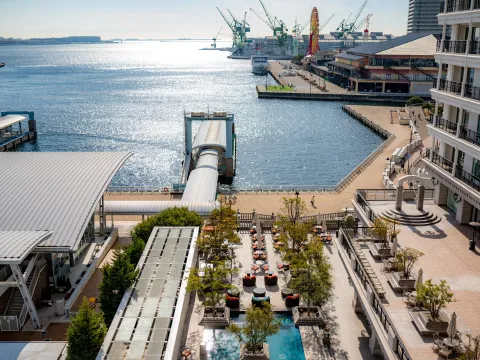
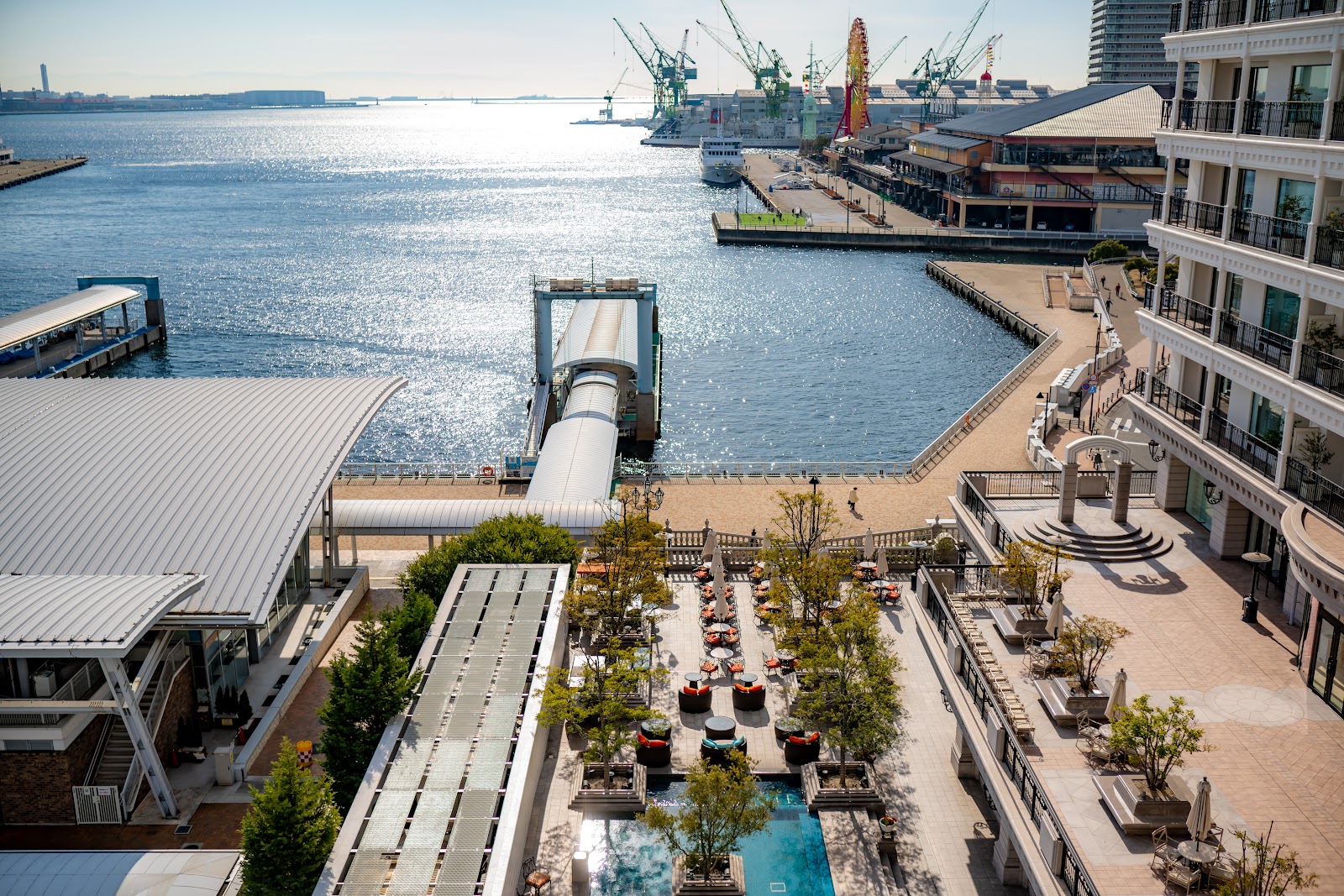
Harbor-facing rooms in Kobe feel almost European at night. Ferries slide past Kobe Port, the illuminated tower glows red, and the city’s grid stretches back towards the slopes of Mount Rokko. Luxury hotels cluster around the waterfront and the Sannomiya area, giving easy access to both the shinkansen at Shin-Kobe and the compact downtown of this city in Hyogo Prefecture. Expect polished service, generous room sizes by Japanese standards and a mix of Western and Japanese-style rooms.
Staying near Meriken Park or along the waterfront suits travelers who want to walk straight from their hotel to the harbor promenade, then on to the Nankinmachi Chinatown district for dinner. Rooms here often prioritize the view: floor-to-ceiling windows, corner layouts, and higher floors that look across the bay towards Awaji Island on a clear day. If you prefer a quieter base, hillside properties closer to Kitano’s former foreign residences trade direct port access for a more residential feel and quick escapes up to the Rokko mountain area.
Kobe also works as a practical hub. From a central hotel you can visit the museum of art on Port Island, detour to the Nada sake district, or take a day trip to Himeji Castle in under an hour from Sannomiya Station. For travelers planning a broader Kansai region circuit that includes Osaka and Kyoto, one or two nights in Kobe provide a softer, maritime counterpoint to the intensity of those cities, without sacrificing comfort or refinement.
- Kobe Meriken Park Oriental Hotel – Kobe waterfront hotel right on the harbor, most rooms with balcony sea views; around 10 minutes by taxi from JR Sannomiya Station; ideal for travelers who want resort-style sunsets without leaving the city.
- Hotel La Suite Kobe Harborland – Boutique luxury property in Harborland, all rooms with ocean-facing terraces and large baths; roughly 5 minutes by taxi from Kobe Station; best for couples seeking a romantic Kobe bay stay.
- ANA Crowne Plaza Kobe – High-rise hotel directly connected to Shin-Kobe Station on the shinkansen line; convenient for Kansai touring, with city and mountain views; a strong choice for business travelers and short stays.
Arima Onsen: classic hot spring stays in the mountains above Kobe
Steam rising from hinoki tubs, the faint scent of minerals on your skin after a late-night soak. Arima Onsen, tucked into the northern side of Mount Rokko, is one of Japan’s oldest hot spring towns and the most accessible onsen area from Kobe and Osaka. Hotels here lean into the full Japanese ryokan experience: tatami rooms, seasonal kaiseki dinners served in-room or in private dining spaces, and a focus on the ritual of bathing rather than urban distractions.
The town is known for its two types of hot spring. The gold-colored “kinsen” waters, rich in iron and salts, and the clear “ginsen” springs, lighter on the skin. Many properties offer both indoor baths and open air rotenburo, some with hillside views over the compact city of Arima below. When comparing hotels, look closely at the onsen facilities: number of baths, whether there are private family baths you can reserve, and how the design frames the surrounding landscape.
Arima suits travelers who want immersion without remoteness. From central Kobe you can reach the town in roughly an hour by train and ropeway, yet once you step onto its narrow streets, lined with traditional shops and small temples, the mood shifts completely. A stay here pairs well with a night or two in Kobe city: harbor lights first, then mountain springs. If you are planning a Kansai itinerary that already includes Kyoto’s temples and Osaka’s food scene, Arima Onsen adds a restorative, deeply Japanese counterpoint.
- Arima Grand Hotel – Large onsen resort on a hill above town, with panoramic open air baths and both kinsen and ginsen springs; about 10 minutes on foot or a short shuttle ride from Arima Onsen Station; good for families and groups.
- Tocen Goshoboh – Historic ryokan near the central streets, combining classic architecture with refined kaiseki; roughly 5 minutes’ walk from Arima Onsen Station; ideal for travelers seeking one of the best ryokan in Arima with strong sense of place.
- Arima Onsen Taketoritei Maruyama – Quiet inn slightly up the slope, known for private open air baths that can be reserved; shuttle service from the station in a few minutes; suits couples who value privacy and personalized service.
Kinosaki Onsen and Toyooka: slow travel on the Sea of Japan coast
Wooden geta clacking on stone streets, guests strolling in yukata between bathhouses. Kinosaki Onsen, in Toyooka city on the Sea of Japan side of Hyogo, offers one of the country’s most atmospheric hot spring experiences. Here, the hotel is only part of the story. The town’s seven public baths, each with its own character, form an extended onsen circuit that guests access with a simple pass, moving from one steaming doorway to the next.
Many higher-end hotels and ryokan in Kinosaki Onsen provide both in-house baths and access to this wider network. Some focus on intimate, garden-facing open air baths; others emphasize river views along the willow-lined Otani River. When choosing where to stay, consider whether you prefer a quieter location slightly away from the main street or a central address that lets you step straight into the evening flow of yukata-clad visitors.
Beyond the baths, Toyooka rewards those who linger. The wetlands of the nearby national park area are known for stork reintroduction efforts, and the Sea of Japan coastline offers rugged scenery that feels far removed from Osaka–Kyoto circuits. For winter travelers, this part of Hyogo Prefecture is also associated with crab-focused cuisine, often served in elaborate multi-course dinners at traditional properties. It is a place to slow down, not to tick off sights.
- Nishimuraya Honkan – Landmark ryokan with landscaped gardens and classic wooden interiors, a short walk from Kinosaki Onsen Station; stays typically include kaiseki dinners featuring local seafood; best for travelers wanting a flagship Kinosaki experience.
- Kinosaki Onsen Nishimuraya Hotel Shogetsutei – Resort-style property in a forested setting slightly outside the main street, with large open air baths and spa facilities; about 5 minutes by shuttle from the station; suits guests who prefer more space and modern comforts.
- Onishiya Suishoen – Atmospheric inn with a central pond and lantern-lit corridors, offering access to the seven public baths; roughly 10 minutes on foot or a short shuttle ride from the station; a good balance of price and traditional ambience.
Awaji Island and Minamiawaji: resort-style stays between Honshu and Shikoku
Driving across the Akashi Kaikyo Bridge from Kobe, the city falls away in your rearview mirror and Awaji Island opens up ahead, framed by the Inland Sea. This is where Hyogo Awaji resorts come into their own. Properties in Minamiawaji and along the island’s eastern coast tend to emphasize sea views, outdoor pools and, increasingly, contemporary Japanese design that blends wood, stone and glass. Many rooms face directly onto the water, with balconies that catch the first light of morning.
Awaji Island works well for travelers who want a resort atmosphere without leaving the Kansai region. You can spend the day exploring coastal roads, visiting small shrines or stopping at viewpoints over the Naruto Strait, then return to a hotel where the main decisions are which onsen bath to try before dinner and whether to dine on local seafood or Awaji beef. Some properties integrate hot spring facilities, offering both indoor and open air baths that look out over the sea or landscaped gardens.
Compared with Kobe or Arima Onsen, the rhythm here is slower, the nights darker, the stars more visible. It is less about museums or urban attractions and more about space, sea air and the simple pleasure of watching ships move silently across the horizon. If your Japan itinerary already includes dense days in Osaka and Kyoto, two or three nights on Awaji Island can rebalance the trip, especially for couples or families who value privacy and room to breathe.
- Hotel Anaga – Long-established small resort in Minamiawaji with views over the Naruto Strait, known for refined French-Japanese cuisine; around 40–50 minutes by car from Kobe via the Akashi Kaikyo Bridge; ideal for food-focused travelers.
- Grand Nikko Awaji – Large resort complex near Awaji Yumebutai, featuring ocean-view rooms and gardens; about 45 minutes by highway bus from Kobe Sannomiya; good for families and guests who want facilities like pools and spa.
- Awaji Hamarikyu – Intimate seaside ryokan-style hotel with onsen baths and rooms facing the beach; roughly an hour by car from central Kobe; suits couples seeking a quieter Awaji Island retreat.
Himeji and central Hyogo: castles, culture and practical bases
White plaster walls, layered roofs, and a straight, almost ceremonial approach from the station. Himeji Castle dominates its city, and for many travelers it is the single reason to visit this part of Hyogo Prefecture. Yet staying overnight rather than day-tripping from Osaka or Kyoto changes the experience. You can walk the castle grounds in the late afternoon when the crowds thin, then explore the quieter streets around Otemae-dori once the tour buses have gone.
Hotels in Himeji city tend to be more functional than indulgent, but there are still comfortable options with views towards the castle or the surrounding low-rise neighborhoods. For travelers prioritizing cultural sightseeing over onsen time, this can be a smart base. From here, rail connections spread out across the prefecture, making it easier to visit smaller towns or continue west towards Okayama and beyond.
Elsewhere in central Hyogo, you will find a scattering of properties near parks, local museum spaces and smaller historic districts. These stays suit travelers who enjoy being the only foreign guests in the lobby, who value proximity to a morning market over a grand hotel lobby. It is a different kind of luxury: time, quiet, and the sense of being folded into everyday Japanese life rather than observing it from a distance.
- Hotel Nikko Himeji – Full-service city hotel directly in front of JR Himeji Station, with easy access to the shinkansen and local lines; about 15–20 minutes on foot or a short bus ride to Himeji Castle; convenient for one-night stopovers.
- Daiwa Roynet Hotel Himeji – Modern mid-range property within walking distance of the station and shopping streets; offers compact but comfortable rooms; a practical choice for travelers focused on sightseeing value.
- Comfort Hotel Himeji – Simple, budget-friendly hotel around 8–10 minutes’ walk from JR Himeji Station; best for visitors who prioritize location and cleanliness over amenities.
How to choose the right Hyogo hotel for your trip
Start with geography, not room photos. If you want an urban base with easy access to the rest of the Kansai region, Kobe city or Himeji make the most sense. For travelers whose priority is onsen culture, Arima Onsen and Kinosaki Onsen are the clear choices, each offering a dense concentration of hot spring hotels and baths. Those seeking resort-style downtime should look closely at Awaji Island and Minamiawaji, where properties lean into sea views and open air relaxation.
Next, consider how “Japanese” you want your stay to feel in terms of format. Some hotels in Hyogo Prefecture offer Western beds and familiar layouts with only a small nod to local design. Others are fully traditional, with futons on tatami, low tables and multi-course kaiseki dinners that can stretch over several hours. There is no right answer, but being honest about your comfort level will help you avoid a mismatch between expectation and reality.
Finally, look beyond the headline features on any website. In an onsen hotel, the quality and variety of baths matter more than lobby grandeur. In a city property, proximity to a station or a particular neighborhood – Sannomiya in Kobe, for instance – can transform how easily you move. Think about what you want to see and how you like to spend evenings, then choose the part of Hyogo that aligns with that rhythm. The prefecture is diverse enough that there is usually a precise match, if you know where to look.
Is Hyogo Prefecture a good place to stay for a first trip to Japan?
Hyogo Prefecture works best as part of a broader Kansai itinerary rather than as a standalone first destination. For a first trip, many travelers base themselves in Osaka or Kyoto and add one or two nights in Kobe, Arima Onsen or Kinosaki Onsen to experience hot springs and a different pace. The region offers a strong mix of city life, historic sites like Himeji Castle and classic onsen towns, which makes it an excellent complement to Japan’s better-known hubs.
What is the best time to visit Hyogo for hotel stays?
Hyogo is a year-round destination, but the experience shifts with the seasons. Winter, from December to February, is considered high season for many onsen areas, especially Kinosaki Onsen and Toyooka, when travelers come for hot spring baths and seasonal cuisine. Spring and autumn bring milder weather and are ideal for combining city stays in Kobe with excursions to Himeji Castle or Awaji Island, while summer suits resort-style trips focused on sea views and longer days.
Where should I stay in Hyogo if I want hot springs?
For travelers focused on hot springs, Arima Onsen and Kinosaki Onsen are the two standout areas in Hyogo Prefecture. Arima, close to Kobe, offers easy access from the main Kansai cities and a compact town filled with hotels that feature both gold and silver hot spring waters. Kinosaki Onsen, in Toyooka city on the Sea of Japan coast, is better for those who want a full onsen town experience, walking in yukata between multiple public baths as well as enjoying in-house facilities.
Is Kobe a good base for exploring Hyogo and the Kansai region?
Kobe is an excellent base if you want a comfortable city hotel with strong transport links. From central Kobe you can reach Osaka and Kyoto by train, visit Himeji Castle on a straightforward day trip, or head up to Arima Onsen for a night in the mountains. The city itself offers harbor views, a compact downtown, and easy access to cultural spots such as the local museum of art and the sake breweries in the Nada district.
How many days should I plan in Hyogo Prefecture?
A focused visit to Hyogo Prefecture can work in as little as two nights, for example one night in Kobe and one in Arima Onsen. To experience the variety of the region – a port city, a historic castle, and a full onsen town such as Kinosaki Onsen – four to five nights is more comfortable. Travelers with more time can add Awaji Island or Toyooka’s coastal areas for a slower, resort-style or nature-focused stay.