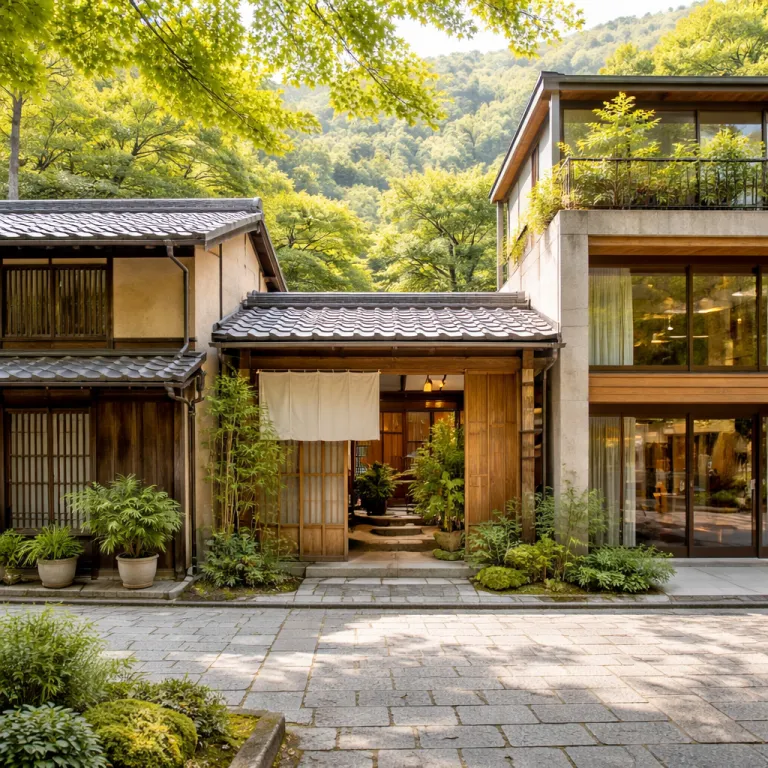
Why “accommodation in Japan” is three different worlds, not one list
Searching for accommodation in Japan often throws ryokan, machiya and design hotels into one ranking. For a premium family planning to travel Japan, that kind of list hides the real decision you must make about ritual, privacy and how your children will actually experience Japanese culture during each night. When you understand how each category of lodging works in practice, every stay becomes a deliberate choice rather than a lucky guess.
In major cities across Japan, the same search page might show a traditional ryokan beside western hotels, a capsule hotel and a high floor business hotel, even though these types of accommodation follow completely different rules. A traditional Japanese ryokan is a form of accommodation where tatami style rooms, kaiseki dinners and hot spring bathing shape the entire rhythm of your stay, while a design focused hotel in Tokyo or Kyoto behaves more like a western style property with restaurants, concierges and familiar room layouts. Machiya townhouses sit somewhere between, offering independent places to stay that travelers can treat as a temporary home, with fewer staff interactions but deeper neighborhood immersion.
For families, the stakes are higher because one person might crave a temple quiet atmosphere while another needs space for bedtime routines. Children may love futons on tatami in a Japanese style room, yet parents might prefer at least one western style bed after a long flight and a late night arrival. This is why thinking in terms of experiences rather than generic hotel lists is the most reliable way to match your travel expectations with the right room keys.
Ryokan and modern traditional inns: ritual, onsen and family readiness
A ryokan is a traditional Japanese inn with tatami rooms and meals. That single sentence captures the essence, but for luxury travelers choosing accommodation in Japan, the reality is more layered and more physical, from the feel of the tatami under bare feet to the way a host quietly slides open your room door with evening tea. At the higher end, expect rates from around 60,000 yen per person for suites with private hot spring baths, in room kaiseki and staff who will adjust every ritual to your family’s rhythm, based on price ranges reported by Japan Guide’s 2024 accommodation cost overview.[1]
Classic ryokan and other traditional inns usually offer Japanese style rooms where futons are laid out after dinner, and where sliding shoji screens replace heavy doors, which can be magical for children but challenging for light sleepers. Many of these properties are located near hot spring towns or Buddhist temples, so your walk from room to rotenburo might pass a mossy stone lantern or a distant temple bell, creating a sense of place that no standard chain hotel can replicate. Some modern ryokan now blend omotenashi with global design, adding a few western style rooms or low platform beds so multi generational family groups can choose between traditional Japanese sleeping and more familiar layouts.
Families should ask directly how a specific ryokan handles children, because not every traditional inn will welcome younger guests in the same way. Some properties in Kyoto or Hakone limit stays to older children to preserve a quiet atmosphere, while others provide kids’ kaiseki menus, earlier dinner times and even private onsen slots for one family per night. When you read reviews for a potential stay, treat them like a refined business hotel evaluation, checking not only food and service but also how staff manage noise, shared baths and mixed age groups in rooms that were originally designed for smaller households.
For an example of how ritual can define a property, look at the detailed spa routine described in this analysis of Aman Kyoto’s morning spa ritual, which shows how a luxury hotel in Japan can borrow from temple like calm and hot spring traditions without copying the full ryokan format. Family friendly ryokan such as Hoshinoya Kyoto or Gora Kadan in Hakone illustrate this hybrid approach in practice, combining structured dining and bathing customs with flexible room types and staff used to hosting children. It is a reminder that Japanese accommodation is no longer a simple split between western and traditional, but a spectrum where each stay can be tuned to your comfort level.
Machiya townhouses: independent stays in the streets behind the temples
Machiya are traditional Japanese townhouses, especially common in Kyoto, now converted into intimate accommodation for travelers who want to live inside the city’s residential fabric. Instead of a hotel lobby, your first impression might be a narrow alley, a wooden lattice façade and the quiet sound of a nearby temple bell drifting over tiled roofs. For a premium family planning a longer stay, this type of lodging offers autonomy, a kitchen and multiple rooms without the constant choreography of staff led rituals.
Unlike business hotels or capsule hotels, machiya stays usually involve self check in, limited on site staff and a stronger emphasis on respecting neighborhood norms, which suits independent travelers who already feel comfortable navigating Japanese culture. Inside, you often find a mix of Japanese style and western style elements, such as tatami rooms for sleeping combined with western style sofas, modern bathrooms and underfloor heating, which makes them practical for children and grandparents sharing the same house. Many machiya are located within walking distance of Buddhist temples or local markets, turning every morning into a small urban pilgrimage rather than a commute from a distant business hotel tower.
Families comparing different types of stays sometimes overlook machiya because they do not appear in standard hotel filters, yet for visits of three nights or more they can offer better value than multiple hotel rooms. You trade daily housekeeping and on site restaurants for the ability to cook breakfast, spread out luggage and let children nap in one room while adults enjoy tea in another, which is a different kind of luxury. Well known operators such as Nazuna or Iori Machiya provide curated townhouses with clear house rules and support in English, which can ease first time visitors into this format.
When planning travel Japan with a machiya as your base, consider how your family moves through space and time. If you will spend most of each night out at restaurants and only return to sleep, a central business hotel or western style property near major stations might be more efficient. If your ideal stay involves slow mornings, local bakeries and evening walks past lantern lit shrines, a machiya or similar traditional inns will align more closely with the experiences you are seeking.
Design and business hotels: urban comfort, family logistics and hidden gems
Design forward hotels in Japan, from Capella Kyoto to Aman properties and independent labels in Tokyo, translate Japanese spatial logic into contemporary luxury that feels both global and local. These city hotels usually offer generous rooms, strong restaurant programs and concierge teams who understand that a premium family might want both a temple visit and a department store toy floor in the same afternoon. For travelers who value predictable comfort after a long haul flight, this category of accommodation often becomes the default first and last night stay.
In major cities such as Tokyo, Osaka and Fukuoka, you will also encounter a dense layer of business hotels that cater primarily to domestic corporate travel but can work well for short family stays. A typical business hotel offers compact western style rooms with private bathrooms, reliable Wi Fi and optional breakfast, at an average price around 10,000 yen per night according to 2024 figures compiled by Japan Atlas.[2] Chains such as Toyoko Inn, APA Hotel or Dormy Inn are common examples, and while they lack the drama of a hot spring or temple view, their locations near stations and shopping districts can be invaluable when moving with children, strollers and luggage through crowded streets.
Capsule hotels and capsule hotel hybrids add another layer to the urban landscape, though they are usually better suited to solo travelers than to a family group. The average capsule hotel price hovers around 4,000 yen per night, with compact capsule pods and shared facilities that appeal to design curious visitors who want to sample this uniquely Japanese accommodation format, again based on Japan Atlas’ 2024 nationwide averages.[2] Some capsule hotels now offer small family rooms or women only floors, but for most premium family itineraries they work best as a one night side experience for one person rather than the main base.
When mapping where to stay across the country, use a geography led approach rather than chasing a single famous hotel name in each city. A resource such as this strategic overview of where to stay in Japan for luxury travelers can help you decide when a design hotel, a business hotel or a more traditional property makes sense. In dense districts, love hotels will appear on maps as well, but these are short stay properties designed for privacy rather than family travel, so they should be excluded from any serious short list.
Hidden gem stays near temples, hot springs and quiet neighborhoods
Some of the most rewarding accommodation in Japan sits just beyond the obvious sightseeing grid, in streets that run parallel to temple approaches or on hills above hot spring towns. These smaller hotels and inns might be traditional properties with only a handful of rooms, or design driven conversions of old houses that keep their wooden beams while adding modern bathrooms. For a premium family, such places can feel like private retreats where each night’s stay becomes part of the destination rather than a neutral backdrop.
In Kyoto, look for ryokan or machiya one or two blocks behind major Buddhist temples instead of directly on the main approach, where crowds thin out and early morning walks feel almost residential. In Hakone, Kinosaki Onsen or Beppu, consider traditional Japanese inns with family friendly hot spring facilities, such as private rotenburo that can be reserved per person or per family group, avoiding the stress of managing children in large communal baths. These experiences often cost more than a standard business hotel, but they deliver a different category of memory, from watching steam rise over cedar tubs to hearing a distant temple bell as you dry off.
Urban hidden gems exist too, especially in neighborhoods just beyond the central stations of major cities. In Tokyo, for example, a small cluster of western hotels and Japanese style guesthouses around Yanaka and Nezu offers quieter streets, local cafés and easy subway access, which can be ideal for families who want both calm nights and efficient connections. When evaluating these hotels, pay attention to room configurations, because some properties offer connecting rooms or small suites that work better for a family than two separate standard rooms on different floors.
Not every hidden gem will appear on the first page of booking sites, so use filters for traditional inns, ryokan and small hotels, then cross check locations on a map. If a property sits between a river, a park and a temple, it is often worth a closer look, especially if reviews mention quiet nights and attentive staff. This is where the promise of accommodation in Japan as a curated journey rather than a checklist of famous names truly comes into focus.
Self assessment grid: which accommodation in Japan fits your family best ?
Choosing between ryokan, machiya, design hotels and other types of lodging in Japan becomes easier when you frame the decision around how your family actually lives and moves. Start with sleep, because the way each person rests will shape every day of your travel itinerary. If your children sleep best in familiar western style beds, then at least part of your trip should include western hotels or a business hotel with standard rooms, even if you also plan one or two nights in a Japanese style setting.
Next, consider ritual tolerance and curiosity about Japanese culture. A full ryokan stay involves set dinner times, specific bathing etiquette in hot spring areas and staff entering your room to lay out futons, which some families find enchanting and others find intrusive after a long travel day. Machiya and serviced apartments reduce these rituals, offering more autonomy but fewer guided experiences, while design hotels and business hotels sit in the middle, with flexible restaurant hours and private bathrooms that feel closer to home.
Space is the third axis, especially for premium families carrying both luggage and expectations. Traditional Japanese rooms can be surprisingly flexible, because futons roll away to create play space during the day, yet storage for suitcases may be limited compared with western style rooms in international hotels. Capsule hotels and capsule style pods are generally not suitable as primary accommodation for families, though a single night capsule experience for one adult or older teenager can be an interesting story to bring home.
Finally, map your nights against your route through Japan. In major cities at the start and end of the trip, prioritize convenience with a well located business hotel or design property near a station, then insert one or two nights at a hot spring ryokan or temple adjacent inn in the middle as a reset. Hostels, capsule hotels and minshuku exist as budget friendly options, but for premium family travelers they are usually supporting characters rather than the main stage in the broader narrative of where you stay.
Quick family checklist
- List non negotiables: bed type, private bathroom, elevator, non smoking.
- Decide how many nights you want full ritual (ryokan) versus independent living (machiya).
- Check room size and maximum occupancy for every booking, not just price.
- Read at least five recent family reviews focusing on noise, staff attitude and breakfast.
- Confirm child policies, extra bed fees and whether onsen access is age restricted.
Practical booking strategy: timing, reviews and reading between the lines
For luxury and premium stays, the most effective accommodation in Japan strategy starts months ahead, especially for peak cherry blossom and autumn foliage periods. Book in advance, check reviews and consider location as a three step mantra, then refine each step according to whether you are targeting ryokan, machiya or city hotels in major hubs. Online booking platforms and specialist travel agencies both play a role, but the more traditional the property, the more valuable direct communication becomes.
When reading reviews, filter for families and longer stays, because a one night business traveler in a business hotel will focus on different details than a parent managing bedtime after a temple visit. Pay attention to comments about noise, mattress comfort, bathroom layout and staff flexibility, especially in traditional inns where Japanese style rooms and shared baths can feel unfamiliar at first. If you are considering capsule hotels or a capsule hotel hybrid for a novelty night, look for mentions of locker space, gender separated floors and how staff handle late night check ins.
Price benchmarks help frame expectations across different types of accommodation. Data from Japan Guide’s 2024 “Budgeting for a Trip to Japan” article and Japan Atlas’ 2024 hotel price survey suggests that average hostel beds cost around 3,000 yen per night, capsule hotels around 4,000 yen and standard business hotels around 10,000 yen, while luxury ryokan with private hot spring baths start much higher per person.[1][2] These figures underline why many premium families choose a mix of properties, combining a few high impact nights in traditional Japanese settings with more economical nights in western style hotels to balance the overall budget.
Finally, remember that love hotels, while highly visible in some entertainment districts, are not designed for family use and should be excluded from serious planning. Focus instead on properties that align with your values, your children’s needs and your own appetite for ritual, whether that means a quiet ryokan near Buddhist temples or a sleek design hotel above a station concourse. With a clear framework and honest self assessment, every night of your stay becomes part of a coherent story rather than a disconnected series of rooms.
Key figures for accommodation in Japan
- Average hostel beds in Japan cost around 3,000 yen per night according to Japan Guide’s 2024 budgeting guide,[1] which highlights how budget accommodation can free funds for one or two luxury ryokan nights.
- Capsule hotels average about 4,000 yen per night based on Japan Atlas’ 2024 nationwide hotel price data,[2] making a capsule stay an affordable one night experience rather than a long term base.
- Business hotels typically charge around 10,000 yen per night according to the same Japan Atlas survey,[2] offering compact western style rooms with private bathrooms that work well for short urban stays.
- Luxury ryokan with private hot spring baths and in room dining often start from roughly 60,000 yen per person, as illustrated by upper tier listings in Japan Guide’s 2024 accommodation cost examples,[1] reflecting the intensive service model and multi course kaiseki meals included in the rate.
- Modern ryokan and traditional inns are available year round across Japan, but peak demand during cherry blossom and autumn foliage seasons can push prices significantly higher, reinforcing the need to book in advance.
FAQ about accommodation in Japan
What is a ryokan and how is it different from a hotel ?
What is a ryokan? Traditional Japanese inn with tatami rooms and meals. Unlike a standard hotel, a ryokan structures your stay around set dinner times, futon bedding on tatami and often shared hot spring baths, creating a more ritualized experience. For families, this means planning your night around the property’s schedule rather than treating the room as a simple place to sleep.
Are capsule hotels comfortable for travelers ?
Are capsule hotels comfortable? Compact but efficient for short stays. Each capsule provides a bed, light and small storage area, while bathrooms and lounges are shared, which works well for solo travelers who value location over space. For premium families, a capsule hotel is usually best treated as a one night curiosity for one person rather than the main form of accommodation in Japan.
Do business hotels in Japan usually include breakfast ?
Do business hotels offer breakfast? Many provide breakfast options. In practice, most business hotels in major cities sell simple buffet or set breakfasts featuring both Japanese and western items, which can be convenient before early train departures. Families should check whether breakfast is included in the rate or charged separately, as this can affect the overall value of a multi night stay.
How far in advance should I book accommodation in Japan ?
For peak cherry blossom and autumn foliage seasons, luxury and premium travelers should aim to book key hotels, ryokan and traditional inns at least three to six months ahead. In quieter periods, business hotels and western hotels in major cities may be available closer to the date, but small ryokan and machiya still reward early planning. Booking early also gives you more choice of Japanese style or western style rooms, which is crucial for families.
Is it realistic to mix different accommodation types in one trip ?
Combining several types of accommodation in a single itinerary is not only realistic but often ideal for premium families. Many travelers pair design or business hotels in Tokyo and Osaka with one or two nights at a hot spring ryokan and perhaps a machiya stay in Kyoto, balancing ritual, comfort and budget. This mix lets each person in the family experience both traditional Japanese hospitality and the convenience of western style hotels without over committing to one format.
[1] Japan Guide, “Budgeting for a Trip to Japan” and related accommodation cost examples, accessed March 2024. [2] Japan Atlas, 2024 nationwide survey of average hostel, capsule hotel and business hotel prices, accessed March 2024.