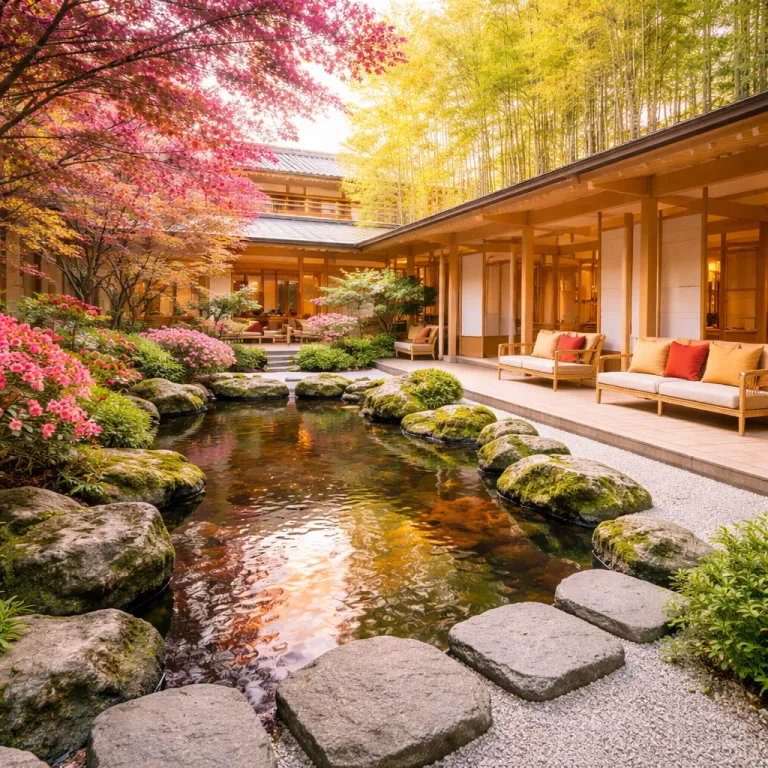
The courtyard as compass: how the garden organizes Capella Kyoto
The first impression at Capella Kyoto is not the façade but the hush of the central garden. This four story luxury hotel, which opened in 2025 with 92 rooms and suites, wraps its accommodation around a Japanese courtyard, turning the landscape into a quiet stage that orients every corridor, restaurant and spa ritual. In a city like Kyoto, where temples, townhouses and former elementary school buildings often hide behind narrow streets, this inward facing plan feels both contextually right and architecturally bold.
The architect Kengo Kuma uses the courtyard to filter light, sound and privacy, so the hotel becomes a sequence of thresholds rather than a single grand lobby. Capella and its partners rely on traditional machiya inspired architecture, local materials such as cedar, stone and washi, and the integration of gardens to preserve Kyoto Japan heritage while still delivering contemporary luxury. That choice costs usable square meters compared with some hotels near Kyoto station, yet it earns something rarer for couples: a sense that the city’s rhythm stays just beyond the shoji screens while your own pace slows to match the raked gravel.
From the ground floor, the garden reads almost like a shared living room for the entire Kyoto hotel property. Higher rooms and onsen style suites look down into the planting, so you read the design as layered planes of stone, moss and water rather than a flat postcard. For this review of Capella Kyoto, the key points are simple: the courtyard is not decoration, it is the organizing principle that shapes how you move, where you pause and how you remember this stay in Kyoto.
Rooms around the garden: how views, floors and light change the stay
Walk the guest corridors at Capella Kyoto and you feel the garden pulling you sideways through every opening. Rooms on the lower floors sit closest to the planting, so couples wake to the sound of water and the sight of carefully framed stone lanterns rather than the wider city. Upper level rooms trade that intimacy for longer views across Miyagawa cho rooftops, where geiko maiko slip between teahouses and the skyline hints at distant temple roofs.
This Kyoto hotel review focuses on how those perspectives change the experience more than the square meter count. Corner suites with deep soaking tubs angled toward the courtyard feel almost like private onsen suites, especially at night when the garden glows and the rest of Kyoto Japan recedes into darkness. If you want to understand what 92 rooms around a courtyard actually feel like, study how the living room zones in each suite are oriented: sofas and low chairs almost always face inward, toward the garden, not outward toward the city.
Inside, Brewin Design Office softens Kengo Kuma’s structure with warm timber, textured washi and a restrained palette that lets the garden carry the color. The design office leans into tactility rather than spectacle, so even standard rooms feel calm rather than crowded with statement pieces. For couples comparing the best hotels in the city, the most important points are these: choose a room by its relationship to the courtyard, not just by category name, and read a deeper Capella Kyoto review or the official fact sheet for a floor by floor sense of how that choice will shape your stay.
Dining, wellness and the garden: how programs plug into the courtyard
At Capella Kyoto, the courtyard does not stop at the guestroom windows; it threads through the restaurant, bar and spa like a quiet co star. The main restaurant takes cues from Sonoma’s SingleThread, not by copying its cuisine but by echoing its choreography of seasons, ceramics and garden driven menus. Couples seated along the windows watch Kyoto’s weather move across the planting, so every course feels anchored in a specific moment rather than a generic luxury hotel script.
This Kyoto resort style review would be incomplete without addressing how the Auriga Spa uses the garden as a kind of external treatment room. Relaxation lounges and some bathing suites borrow their calm from the courtyard, with rituals timed to early morning mist or late evening shadows. When the cherry blossom season arrives, petals drift across stone and water, turning even a short spa visit into a quietly cinematic experience that rivals time spent at a temple.
The design of circulation keeps public spaces close to the courtyard, so you rarely lose sight of greenery as you move between room, restaurant and Auriga Spa. That decision means fewer deep interior spaces but more visual continuity, a trade off that suits couples who value atmosphere over sheer amenity count. For readers comparing stays across Japan, including more urban options or an elegant and memorable stay in Hiroshima, this Kyoto hotel review suggests prioritizing properties where dining and wellness are physically and visually tied to a garden, not just to a skyline.
Where the architecture sings, and where it still feels in progress
Not every gesture at this hotel lands with the same quiet confidence as the courtyard. Some circulation routes, especially near service zones, feel slightly over programmed, as if the design had to bend around back of house requirements that nibble at the purity of the garden centric plan. In a few rooms, the balance between view, privacy and storage tilts awkwardly, leaving couples with beautiful windows but fewer practical places to unpack.
Yet the core architectural story remains strong enough that these points feel like refinements rather than structural flaws. Kengo Kuma’s handling of thresholds, from street to lobby to garden, gives the hotel a narrative arc that many luxury hotels in Japan lack, especially those converted from former office or elementary school buildings. Brewin Design’s interiors mostly support that arc, though some guests may wish for bolder art moments that speak more directly to Kyoto’s avant garde side.
From an editorial perspective, this Kyoto design hotel review rates the property among the best stays for couples who care about architecture as much as service. The fusion of traditional and contemporary design is not marketing language here; it is visible in every junction where timber meets glass, or where a corridor frames a single maple tree. For travelers who follow critics as closely as they follow the Points Guy, the verdict is clear enough: Capella Kyoto is a hotel where architecture leads, and where the remaining rough edges are worth tolerating for the sake of that central garden.
Location, context and how Capella Kyoto fits a wider Japan itinerary
Capella Kyoto sits in the historic Miyagawa cho district, a short walk from the Kamogawa river and within easy reach of several major temple precincts. This position places the hotel between the theatrical world of geiko maiko culture and the quieter residential lanes that still define much of Kyoto city life. For couples, that means you can step from the calm of the courtyard into lantern lit streets without needing a taxi or complex directions.
In practical terms, Kyoto station lies a short ride away, making arrivals from other parts of Japan straightforward, whether you are coming from Tokyo or pairing the stay with a design focused trip to Hiroshima. Many readers planning a wider circuit through the country will compare this Kyoto accommodation review with guides to where to stay in Hiroshima for an elegant and memorable stay, weighing how many nights to allocate to each city. The answer often depends on how deeply you want to engage with Kyoto Japan’s layered history of temples, gardens and traditional entertainment districts.
Within the hotel, small details reinforce the sense of place; staff share insights on nearby tea houses, explain the etiquette around geiko maiko performances and suggest less crowded temple walks during peak cherry blossom days. Capella’s cultural équipe also highlights key facts often asked in travel forums, such as the design inspiration behind Capella Kyoto being traditional machiya townhouses and the location in Kyoto's historic Miyagawa cho district. For couples building a longer itinerary across multiple hotels, this Kyoto city review positions Capella as the Kyoto anchor, the stay that ties together urban energy, architectural clarity and the quieter rituals that make returning to the courtyard feel like coming home.
Guest stories: how couples actually live in and around the courtyard
Architecture sets the stage, but guest stories reveal how a hotel really works. In this Capella Kyoto write up, couples repeatedly describe the courtyard as a kind of shared memory, the image that lingers long after specific room numbers or restaurant menus fade. One pair spoke of timing their onsen style baths so that steam rose just as lanterns flickered on, turning their suite into a private frame for the garden below.
Another guest, a design focused guy who usually tracks loyalty points and follows the Points Guy for strategy, admitted that he stopped caring about program charts once he settled into the living room of his suite. He found himself counting the layers of planting instead of the points per night, a small but telling shift for someone used to optimizing every stay. In April 2024, one returning couple summed it up simply: “We booked for the architecture and stayed for the courtyard; it’s the image we carried home more vividly than any temple.”
These narratives matter because they show how Capella’s choices around layout, materials and sightlines translate into lived experience. Courtesy Capella, the hotel shares images of couples reading by low windows, sipping tea while rain patterns the stone, or watching cherry blossom petals settle on water after a windy afternoon. For travelers deciding between several luxury hotels in Kyoto Japan, these guest stories support the central argument of this Kyoto hotel review: if you value architecture that shapes your day from first light to last drink, the garden at Capella Kyoto is not just a view, it is the quiet protagonist of your trip.
FAQ
How many rooms does Capella Kyoto have, and how are they arranged ?
Capella Kyoto offers 92 rooms and suites arranged around a central Japanese garden courtyard. This four story configuration means most rooms face inward toward the planting rather than outward toward busy streets. The result is a consistently calm atmosphere, even though the hotel sits in a lively part of the city.
What is the design concept behind Capella Kyoto ?
The property is inspired by traditional machiya townhouses, using local materials and garden integration to echo Kyoto’s historic urban fabric. Kengo Kuma leads the architecture, while Brewin Design Office handles interiors with a focus on tactility and warmth. Together they create a fusion of traditional and contemporary design that feels rooted rather than themed.
Where exactly is Capella Kyoto located in the city ?
Capella Kyoto stands in the Miyagawa cho district, one of Kyoto’s historic entertainment areas near the Kamogawa river. The location places guests within walking distance of teahouses, geiko maiko culture and several major temple approaches. Access to Kyoto station is straightforward by taxi or public transport, making it easy to connect with other parts of Japan.
What kind of spa and wellness facilities does the hotel offer ?
The hotel’s Auriga Spa includes treatment rooms, relaxation lounges and bathing areas that draw visual calm from the central courtyard. Some suites feature deep soaking tubs that evoke onsen traditions, though they are not fed by natural hot springs. Wellness programming often reflects the seasons, aligning treatments with Kyoto’s climate and light.
Is Capella Kyoto a good choice for couples planning a romantic stay ?
Capella Kyoto is particularly well suited to couples who value architecture, privacy and a strong sense of place. The courtyard focused layout, quiet rooms and thoughtful dining program create a setting that feels intimate without being isolated. For many pairs, the combination of design, service and location places it among the best hotels for a romantic Kyoto stay.
References
Hospitality Design; Euronews Travel; Capella Kyoto official website.